
Whitefish Point Michigan: Lighthouse, Shipwreck Museum & Birding (Local Guide)
Last Updated: March 2026
Whitefish Point Michigan sits at the edge of Lake Superior’s Shipwreck Coast, where a narrow finger of land pushes into the lake and funnels freighters toward one of the most treacherous stretches of water on the Great Lakes. This is where you can walk a windswept beach, tour the oldest operating lighthouse on Lake Superior, stand in front of the Edmund Fitzgerald’s recovered bell at the Great Lakes Shipwreck Museum, and watch thousands of migratory birds funnel past the Whitefish Point Bird Observatory. If you’re staying near Tahquamenon Falls, Paradise, or the eastern Upper Peninsula, Whitefish Point is the one stop that ties the whole region together.
I still remember my first visit to Whitefish Point on a windy July day about 15 years ago — the sky was slate grey, Lake Superior was throwing up whitecaps, and the wide beach felt almost empty in the middle of summer. That slightly wild, exposed feeling is a big part of Whitefish Point’s appeal; you’re always aware of how big the lake is and how small you are standing on its edge.
Why Whitefish Point matters — This small point of land anchors Lake Superior’s “Shipwreck Coast,” where hundreds of ships have gone down, and it’s a designated Important Bird Area that funnels more than 300 migratory bird species each year. The combination of maritime history, shipwreck stories, and serious birding makes Whitefish Point one of the most layered stops in Michigan’s Upper Peninsula.
📌 Whitefish Point Michigan at a Glance
- Where it is Whitefish Point is about 11 miles north of Paradise in Michigan’s eastern Upper Peninsula, roughly 1 hour north of the Mackinac Bridge and just under 2 hours from Pictured Rocks National Lakeshore.
- What it’s known for Oldest operating lighthouse on Lake Superior, the Great Lakes Shipwreck Museum, the Edmund Fitzgerald bell, Lake Superior’s “Shipwreck Coast,” and world-class bird migration at Whitefish Point Bird Observatory.
- Best overall day Tour the Great Lakes Shipwreck Museum and lighthouse, walk the beach looking for Lake Superior stones and Yooperlites, then end with birding at the observatory and a quiet sunset on the point.
- Best for families Museum campus and lighthouse tours, short trails and boardwalks, beach time, and pairing the day with nearby Tahquamenon Falls State Park.
- Seasons & weather Main visitor season is May through October; Lake Superior stays cool even in summer, and wind and fog can roll in anytime, so dress in layers.
- Nearby bases Paradise (closest services and lodging), Tahquamenon Falls area, Newberry, and St. Ignace or Mackinaw City for day trips.
For trip planning, I like to think of Whitefish Point Michigan as four experiences in one: the Great Lakes Shipwreck Museum and lighthouse, the long open Lake Superior beach, the underwater preserve and Shipwreck Coast history, and the birding at Whitefish Point Bird Observatory. You can easily do them all in a single day from Paradise, or fold Whitefish Point into a bigger eastern U.P. loop with Tahquamenon Falls, Pictured Rocks, and the Mackinac Straits area.
Quick Picks by Interest
- Best first visit loop Great Lakes Shipwreck Museum and lighthouse, beach walk toward the point, Whitefish Point Bird Observatory.
- Best for history buffs Museum campus exhibits, Edmund Fitzgerald bell, Shipwreck Coast history displays, U.S. Coast Guard and light station stories.
- Best with kids Shipwreck Museum video and exhibits, lighthouse grounds, short boardwalks to the beach, pairing with Tahquamenon Falls.
- Best for photographers Lighthouse and keeper’s quarters, Lake Superior beach in changing light, stormy days with big waves, spring and fall bird migration.
- Quietest experiences Early morning or late evening beach walks, off-peak weekday visits, shoulder-season trips in May, September, and October.
- Pairing ideas Tahquamenon Falls State Park, Paradise-area trails, Mackinac Island or St. Ignace overnights, and wider eastern U.P. road trips.
Visiting Whitefish Point Michigan
The core of a Whitefish Point Michigan visit is the Great Lakes Shipwreck Museum campus, which includes the lighthouse, museum building, lightkeeper’s quarters, and several restored outbuildings right on Lake Superior. Your admission covers the museum exhibits, a film about shipwrecks and the Edmund Fitzgerald, access to the 1861 lightkeeper’s quarters, and the ability to walk the grounds and beach around the point.
- Address 18335 N Whitefish Point Rd, Paradise, MI 49768 · official admission & hours
- Season Open daily May 1 through October 31; limited or no public access in winter.
- Hours Typical summer hours are 10 a.m. to 6 p.m.; verify current times before you go.
- Tickets Admission includes the museum exhibits, film, and light station campus; pricing and family memberships are listed on the official site.
- Policies Drones are not allowed; follow posted rules for beach access and restricted areas around historic buildings.
You can move at your own pace through the exhibits, watch the short film, step into the restored 1861 lightkeeper’s quarters, and walk the boardwalks that thread between the buildings. I like to do the museum and buildings first, then leave the Edmund Fitzgerald bell and the beach walk for later in the visit when everything I’ve just learned has had a little time to sink in.

Pro tip — Stop at the Visitor Information Center on site or in Paradise first if you’re building a bigger eastern U.P. loop. Local staff often have the best current advice on road conditions, waterfall levels, and bird activity.
Whitefish Point Light Station
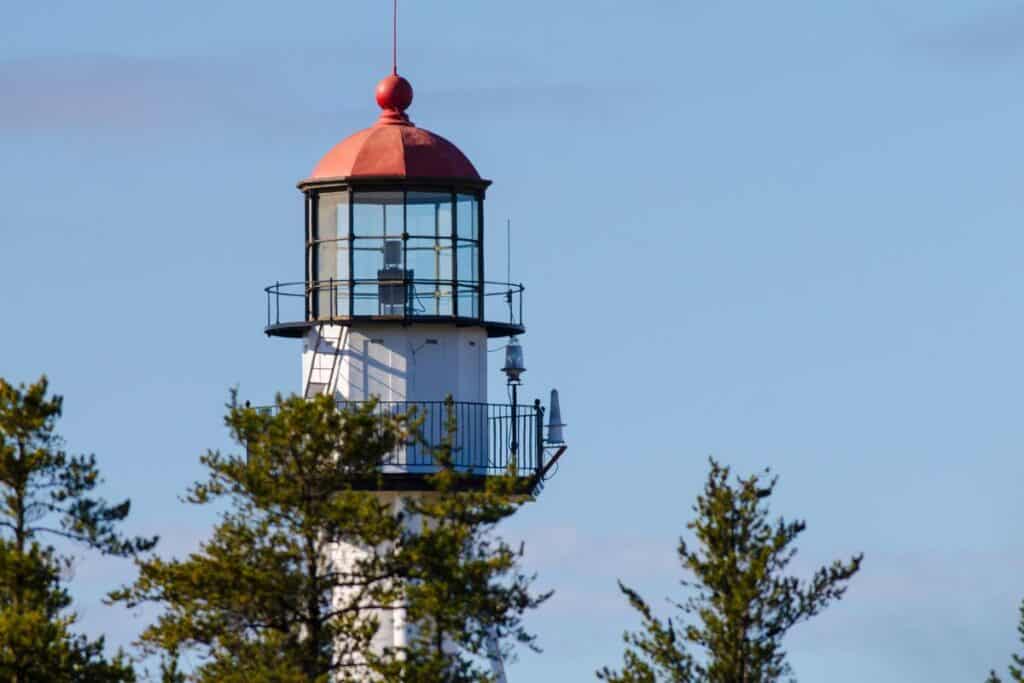
The light station at Whitefish Point was first established in 1849 and is the oldest operating lighthouse on Lake Superior, sitting on the eastern edge of the lake where freighters turn toward the Soo Locks and St. Marys River. The current iron skeletal tower dates to 1861 and rises about 80 feet above the sand, with a bright white tower and red-roofed keeper’s buildings that stand out against the grey-blue water on a stormy day.
- Established 1849 (current iron tower built in 1861).
- Claim to fame Oldest operating lighthouse on Lake Superior and a key navigational aid on the Shipwreck Coast.
- Status Listed on the National Register of Historic Places and as a Michigan State Historic Site.
- Access Grounds and exterior are accessible with museum admission; tower access varies by season and programming.
Even if you’re not a lighthouse superfan, Whitefish Point Light is one of those structures that feels exactly right for its location — tall, spare, and slightly exposed to everything Lake Superior can throw at it. Bring your camera; the bright white and red against dark water, especially on a windy day, is classic Upper Peninsula.

Restoration of the Whitefish Point Light Station
After nearly 175 years of service, the buildings at Whitefish Point needed serious attention, and the Great Lakes Shipwreck Historical Society has worked for years to restore the nine historic structures on the site. Several of the buildings, including the keeper’s quarters, fog signal building, and crew structures, have already been fully restored, with ongoing work focused on preserving the tower and remaining outbuildings.
Restoration is more than fresh paint here — in a place that sees heavy weather, salt-free but ice-heavy winters, and constant wind, steady maintenance is what lets visitors keep walking these same paths season after season. The result feels like a working light station that still tells its own story instead of a static museum diorama.
Michigan’s Shipwreck Coast and Underwater Preserve
The stretch of Lake Superior between Whitefish Point and Grand Marais is known as the “Shipwreck Coast” because of how many vessels have gone down along this 80-mile corridor. Of the roughly 550 major shipwrecks on Lake Superior, an estimated 200 lie near this section of shoreline, preserved in cold, clear water that still draws divers and researchers today.

Whitefish Point Underwater Preserve
The Whitefish Point Underwater Preserve, established in 1987, protects historic shipwreck sites and underwater resources around Whitefish Bay and the point. It’s part of a network of Great Lakes preserves that balance underwater exploration with conservation, and it’s one reason so many wrecks near Whitefish Point remain in relatively good condition for divers and researchers.
The Edmund Fitzgerald Shipwreck
The Great Lakes Shipwreck Museum devotes a significant part of its exhibits to the Edmund Fitzgerald, the Great Lakes ore carrier that went down in a storm on November 10, 1975, about 17 miles northwest of Whitefish Point. All 29 crew members were lost, and the wreck quickly became one of the most well-known shipwreck stories in the world.
The ship’s 200‑pound bell, recovered during a 1995 expedition and replaced on the wreck by a memorial bell engraved with the crew’s names, is now displayed at the museum as a tangible memorial. Standing in front of that bell at Whitefish Point, with Lake Superior just outside, is one of those quietly powerful moments that sticks with you long after you leave.
Guided and self-guided tours, interpretive displays, and the museum film help put the Fitzgerald in context with hundreds of other wrecks along the Shipwreck Coast. It’s a sobering but important part of understanding why this particular point on the map matters so much.
Whitefish Point Bird Observatory
You can’t really say you’ve visited Whitefish Point Michigan without at least stopping in at the Whitefish Point Bird Observatory, which sits just down the road from the light station. Run by Michigan Audubon, WPBO monitors one of the most significant bird migration funnels in the Great Lakes, where more than 300 species have been recorded moving past the point.
- Address 16914 N Whitefish Point Rd, Paradise, MI 49768.
- Affiliation Operated by Michigan Audubon; part of a designated Important Bird Area.
- Seasons Spring and fall migrations are the busiest; some monitoring continues in other seasons.
- Info Check Michigan Audubon or WPBO for current migration reports, visitor hours, and programs.
On a busy migration day, the small observation platforms and dunes can feel like an outdoor classroom — scopes set up, serious birders in layers of fleece, and birds moving through almost constantly. Even if you’re a casual birder, it’s worth lingering here to see what’s moving; on quieter days, it’s simply a peaceful place to sit, listen, and watch the lake.

Whitefish Point Beach
The beach at Whitefish Point is a long, open mix of sand and rounded stones that feels wilder than many Lake Superior beaches because there’s so little development around it. To reach the shoreline from the museum, walk past the buildings toward the lake and follow the boardwalks and signed paths out to the sand.
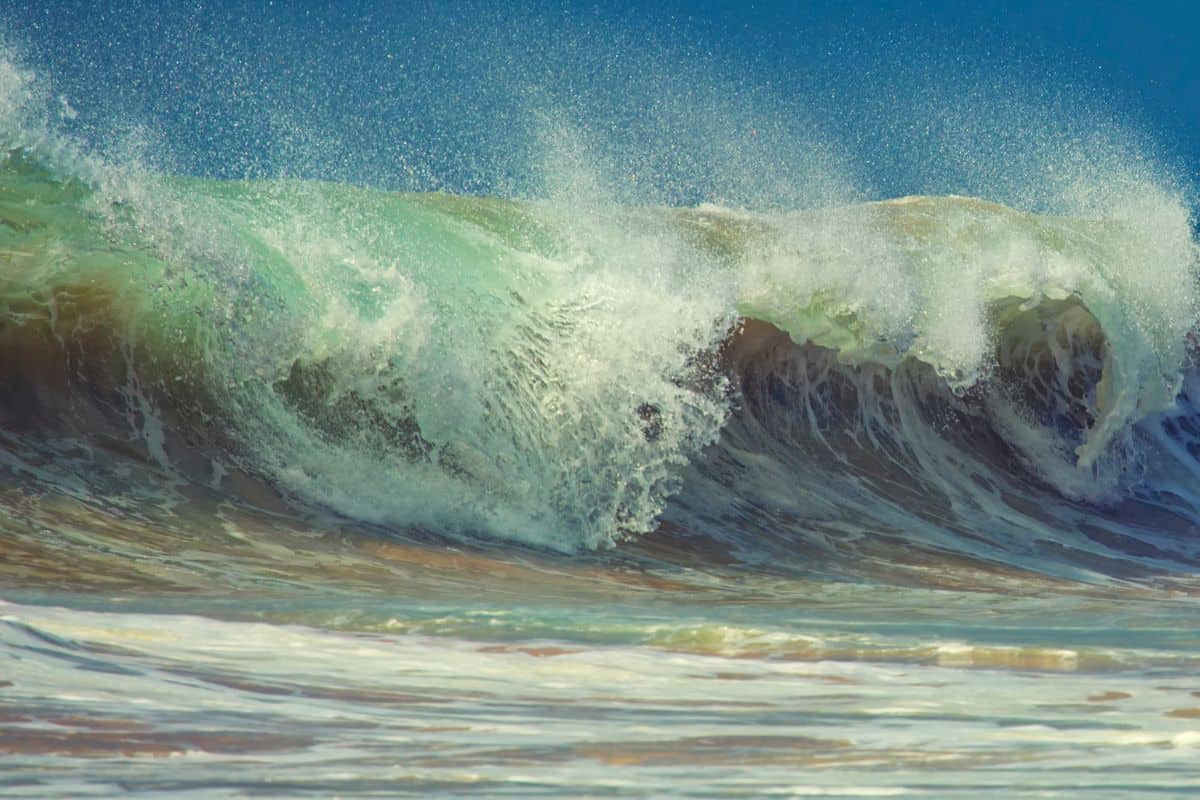
On calm days, it’s a great place for a slow walk, rock hunting, and quiet photo stops. On windy days, the waves can feel more like an ocean than an inland lake, and it’s easy to see why so many shipwrecks lie offshore. Some visitors also search for Yooperlites — fluorescent rocks that glow under UV light — on nearby Lake Superior beaches; just remember that collecting rules vary and the water here is cold even in midsummer.
Getting to Whitefish Point Michigan
Whitefish Point is in Michigan’s eastern Upper Peninsula, north of Paradise in Chippewa County. The last stretch of road is a straightforward drive up Whitefish Point Road from Paradise, and although it feels remote, it is a very doable day trip from several popular U.P. bases.
By car
From Paradise: about 11 miles north on Whitefish Point Rd (M‑123 north, then N Whitefish Point Rd).
From Mackinaw City or St. Ignace: roughly 1–1.5 hours via the Mackinac Bridge and M‑123 through Tahquamenon Falls country.
From Pictured Rocks (Munising): just under 2 hours, making it a reasonable add-on to a longer eastern U.P. loop.
From Traverse City / Grand Rapids / Detroit: plan on a full travel day to reach Paradise, then a shorter drive up to the point.

About Whitefish Point
Whitefish Point has long been a key waypoint for people moving through the Upper Great Lakes — first for Indigenous communities and early voyageurs, then for Jesuit missionaries and fur traders, and later for commercial shipping. The combination of a narrowing lake, frequent storms, and heavy traffic made this one of the most important spots on Lake Superior for navigation and rescue work.
Today, the U.S. Coast Guard presence at the point has changed, but the history is still very much alive in the buildings, exhibits, and stories you’ll encounter at the Shipwreck Museum and light station. When you stand on the beach or look out from the lighthouse grounds, it’s easy to imagine ships trying to find this same point in bad weather long before GPS existed.
When to Visit Whitefish Point Michigan
The best time to visit Whitefish Point Michigan depends on whether you care most about birding, beach walking, or simply having easier driving conditions. Spring and fall bring the most dramatic bird migration, while summer offers the most comfortable weather for pairing Whitefish Point with Tahquamenon Falls and other eastern U.P. stops.
Spring (April–May) is prime time for serious birders as loons, ducks, cranes, hawks, and songbirds funnel past the point, but it can still feel like winter with cold winds off Lake Superior. Summer (June–August) is the easiest season for most travelers, with long daylight, open museum hours, and more predictable road conditions, though it’s still wise to pack layers because onshore winds can be chilly even in July. Fall (September–October) brings another wave of migration, fewer crowds, and beautiful color in the surrounding forests, but the weather turns quickly and some services begin to wind down for the season.

More Activities in Paradise Michigan
Most people pair a Whitefish Point Michigan visit with time at Tahquamenon Falls State Park, home to the famous amber-colored Upper and Lower Falls. Both main viewing areas have accessible trails and boardwalks, and the park is one of the most visited destinations in the U.P. for good reason — wide waterfalls, forest trails, and an on-site brewery and pub near the Upper Falls.
If you’re building a longer trip, you can also add Paradise-area trails, more Lake Superior beach stops, and wider eastern U.P. destinations like Pictured Rocks, Newberry, and the Straits area near Mackinac Island. Whitefish Point fits naturally into all of those loops as the maritime and birding anchor.
Where to Stay Near Whitefish Point Michigan
There’s no big resort at Whitefish Point itself, so most visitors base in Paradise or the Tahquamenon Falls area and drive up for the day. That keeps the point feeling quiet and low-key even in the middle of summer.
If you go — One good option to look at is the Paradise Cottage with Lake and Trail Access Onsite, a three-bedroom cottage we’ve used in summer, fall, and winter. It has a full kitchen, comfortable living space, and a location that makes it easy to reach both Tahquamenon Falls and Whitefish Point without a lot of extra driving.
- About Jill
- Recent Michigan Travel Tips

Jill Halpin is a Michigan travel expert and founder of MyMichiganBeach.com. She has been sourced by The Washington Post and featured in The Detroit News and Detroit Free Press, and appears regularly on WDIV Detroit, FOX 2 Detroit, FOX 17 West Michigan, FOX 32 Chicago, WGN Chicago, and NewsNation — 60+ television appearances to date. She holds an MLIS from Wayne State University and is a Library of Congress Information Science Fellow. See all media features.