
Sleeping Bear Dunes Bonfires: Where to Go, Rules & What to Bring
Last Updated: April 2026
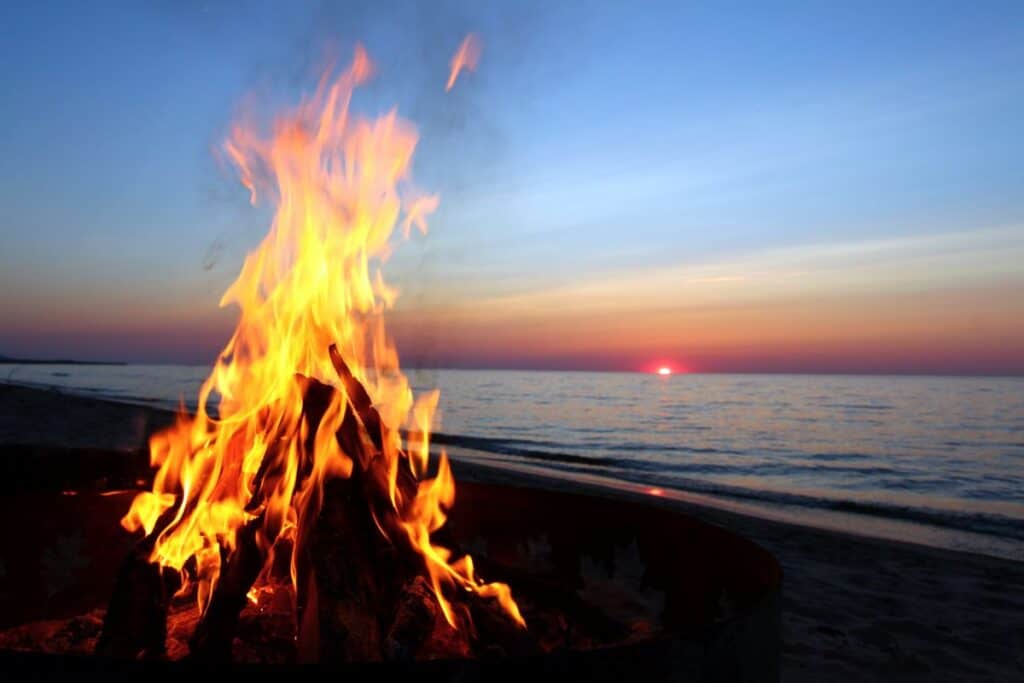
Beach bonfires at Sleeping Bear Dunes National Lakeshore are one of the best ways to end a day in northern Michigan — and they’re allowed at several beaches within the park. Toes in the sand, fire crackling, Lake Michigan waves behind you, and the kind of starry sky you only get this far from a city. Here’s everything you need to know to plan yours.
📌 In a Nutshell
- Where fires are allowed: On NPS Sleeping Bear Dunes beaches only — between the water’s edge and the first dune. Not on the Manitou Islands.
- Best bonfire beaches: Good Harbor Bay Beach, Glen Haven Beach, Esch Road Beach, North Bar Lake
- Bring: Your own firewood (don’t collect from the park), a bucket of water, chairs, and marshmallows
- Extinguish with water — never sand. Sand traps embers and can injure the next day’s beachgoers.
- Park pass required: $25/vehicle 7-day pass — buy in advance at recreation.gov
- Best months: July and August for warm evenings; September for cooler nights with clearer skies and fewer people
Where to Have a Bonfire at Sleeping Bear Dunes
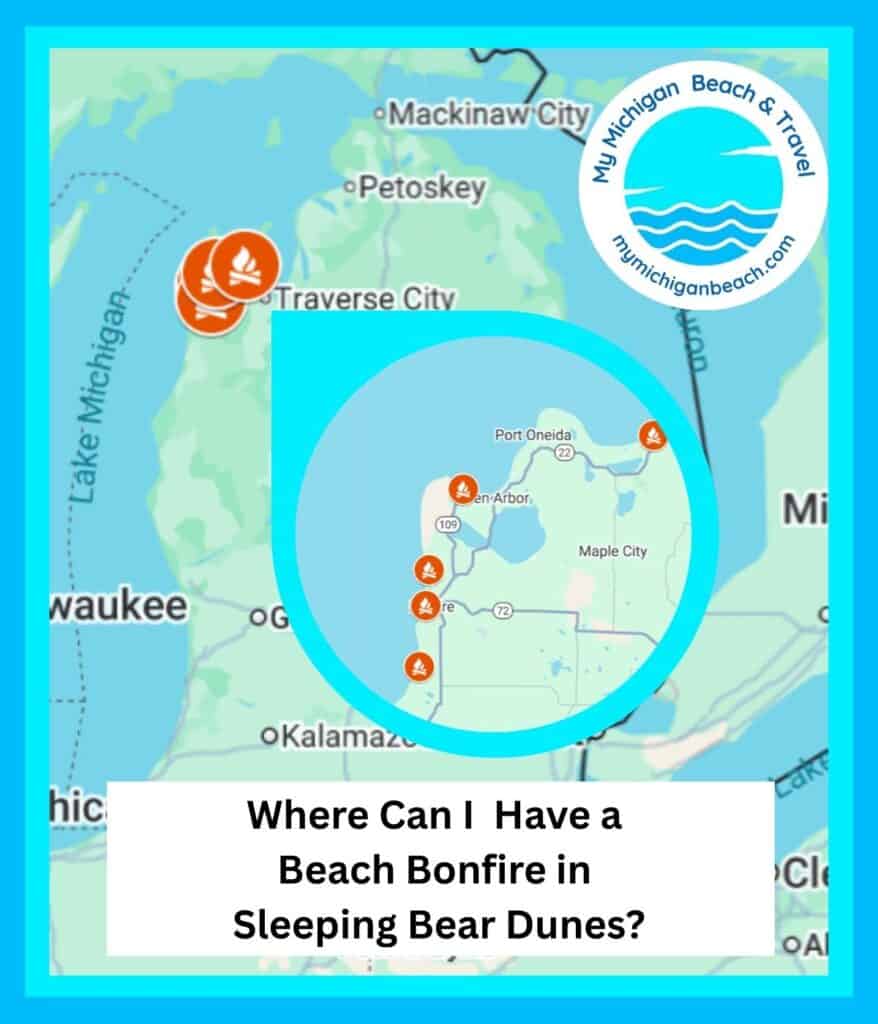
Fires are allowed on NPS Sleeping Bear Dunes beaches between the water’s edge and the first dune — but the beach matters. Here are the five spots I keep coming back to, each with a different personality.
Good Harbor Bay Beach
Good Harbor Bay is my top pick for a bonfire night. Wide, open, and genuinely spacious — you can have a fire without feeling like you’re on top of other people. The views west over the Manitou Islands at sunset are hard to beat, and the sky here once the light fades is some of the darkest in the Lower Peninsula. If you’re going to do one Sleeping Bear bonfire, make it this one.
- 📍 Follow M-22 north past Glen Arbor, take County Rd 651 about 2 miles past Little Traverse Lake to the end
- 💰 Park pass required
- 🐾 Confirm current dog policy at nps.gov/slbe before you go — pet rules vary by beach
Glen Haven Beach
A few miles north of the Dune Climb, Glen Haven sits on Sleeping Bear Bay with panoramic views in every direction — Sleeping Bear Point to the west, Manitou Islands to the north, Pyramid Point to the east. Pair a late afternoon at the historic Glen Haven General Store (penny candy is non-negotiable) with a fire on the beach as the light fades. The restored village gives this beach a different character than the others — it feels like you’re ending your day somewhere with real history behind it.
- 📍 Glen Haven, MI — follow signs from M-109 near the Dune Climb
- 💰 Park pass required
- ♿ ADA-accessible beach
Esch Road Beach
Quieter and a little harder to find than the other beaches — which is exactly why it works for a bonfire. Esch Road Beach tends to have fewer people in the evening, the dune walk in is short, and the setting is wilder than the more accessible spots. Good option if you want to feel like you have the beach to yourself after dark.
- 📍 Off Esch Rd, Benzonia Township — follow signs from M-22 south of Empire
- 💰 Park pass required
North Bar Lake
North Bar Lake is technically an inland lake, but a short walk over the dune gives you direct Lake Michigan access too. This is the best bonfire spot if you’re traveling with kids — the calm inland water is ideal for a last swim before the fire, and the beach is easier to navigate in the dark than the more remote options. The contrast of the warm fire against the cool lake breeze off Lake Michigan is especially good here.
- 📍 North Bar Lake Rd, Empire, MI — just north of Empire off M-22
- 💰 Park pass required
Empire Beach Village Park
Empire Beach is a city park, not an NPS beach — which means different rules apply. Fires are only permitted in the designated fire rings here. The upside: it’s walkable from downtown Empire, has a playground and lighthouse, and is a good option for families who want an easy bonfire without hiking in. Just don’t build a fire outside the rings.
- 📍 Empire Beach Park, Front St, Empire, MI 49630
- 💰 Free — no park pass required (city park)
Bonfire Rules at Sleeping Bear Dunes
The NPS rules are straightforward but a few details matter more than most people realize:
- Fires on NPS beaches only, between the water’s edge and the first dune. Not on the Manitou Islands. Not in parking areas or picnic areas.
- Bring your own firewood. Do not collect wood from the park — ghost forest wood and dune wood are protected. Campers can collect dead and down wood in forested areas, but beach visitors should bring their own.
- Extinguish with water — never sand. Sand insulates embers and keeps them hot overnight. The next morning’s beachgoers can’t see buried embers and can be seriously burned. Drown the fire completely until the coals are visibly wet and cold.
- Keep fires small. Below 3 feet — a large fire is harder to fully extinguish and poses more risk in the wind-exposed lakeshore environment.
- No glass containers on any beach area used for swimming, sunbathing, or wading — NPS regulation.
- Pack out everything. Leave no trace — ashes, food scraps, packaging, all of it.
- Check for fire restrictions before you go — drought conditions can trigger temporary fire bans. Confirm at nps.gov/slbe on the day of your visit.
What to Bring: Bonfire Packing List
A Sleeping Bear bonfire is easy to plan badly — either you forget something essential or you overpack and can’t carry it to the beach. Here’s what actually matters:
- Firewood — a standard bundle from a gas station or grocery store is enough for 2–3 hours. Don’t overestimate how much you need.
- A bucket or large water bottle — for extinguishing. Don’t rely on walking to the water’s edge repeatedly; bring dedicated water for the fire.
- Fire starter — newspaper, fire starters, or a lighter. Damp beach air makes lighting harder than you’d expect.
- Camp chairs or a blanket — you’ll be there longer than you planned
- Marshmallows, skewers, and snacks — Glen Arbor has grocery options if you’re coming from that direction
- Bug spray — lakeshore evenings in June and July bring mosquitoes once the sun goes down
- Layers — Lake Michigan evenings cool down fast even in August; a fleece is not overkill
- A headlamp or flashlight — the walk back to the parking area in the dark is harder than it looks
Best Time of Year for a Sleeping Bear Bonfire
July and August are peak bonfire season — warm evenings, long twilights, and the lake still holding enough summer heat to make wading before the fire comfortable. The tradeoff is crowds, especially on weekends.
September is quietly the best month for a Sleeping Bear bonfire. Crowds drop significantly after Labor Day, evenings cool into the 50s which makes the fire feel earned, and the sky clarity on a September night at Good Harbor Bay is something else entirely. The Milky Way is visible here in ways it simply isn’t closer to Traverse City or anywhere with significant light pollution. I’ve been out on September nights where it felt like the sky was doing most of the work.
Frequently Asked Questions
Yes — beach fires are permitted on Sleeping Bear Dunes National Lakeshore beaches between the water’s edge and the first dune. They are not allowed on the Manitou Islands, in parking areas, or at city parks like Empire Beach (which requires designated fire rings). Always check nps.gov/slbe for current fire restrictions before your visit.
Bonfires are allowed at NPS beaches including Good Harbor Bay Beach, Glen Haven Beach, Esch Road Beach, and North Bar Lake. Fires must be built between the water’s edge and the first dune. Always confirm current conditions at nps.gov/slbe as fire restrictions can change seasonally.
Bring your own firewood (collecting from the park is not permitted), a bucket of water to extinguish the fire, camp chairs or a blanket, bug spray, warm layers, and a flashlight for the walk back. Never extinguish with sand — it traps embers and can injure the next day’s beachgoers.
For the full picture on planning a Sleeping Bear Dunes visit, see our complete Sleeping Bear Dunes guide, and if you’re staying overnight, our Sleeping Bear camping guide covers all campground options including the ones closest to the best bonfire beaches.
- About Jill
- Recent Michigan Travel Tips

Jill Halpin is a Michigan travel expert and founder of MyMichiganBeach.com. She has been sourced by The Washington Post and featured in The Detroit News and Detroit Free Press, and appears regularly on WDIV Detroit, FOX 2 Detroit, FOX 17 West Michigan, FOX 32 Chicago, WGN Chicago, and NewsNation — 60+ television appearances to date. She holds an MLIS from Wayne State University and is a Library of Congress Information Science Fellow. See all media features.