
Sleeping Bear Dunes in Fall: Color Timing, Best Spots & What to Know
Last Updated: April 2026
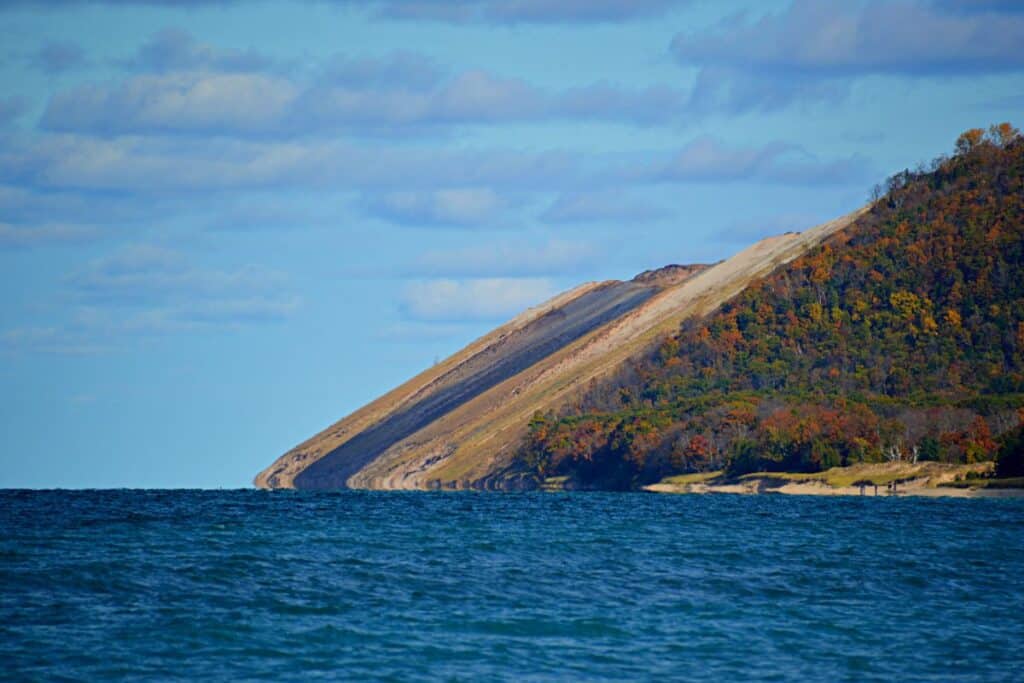
Sleeping Bear Dunes National Lakeshore in fall is a completely different park than the one most visitors know. The summer crowds are gone, the beech-maple forests along the bluffs turn red and gold above turquoise Lake Michigan, and the trails you had to share with hundreds of people in July are suddenly quiet. I’ll say it plainly: fall is the best time to visit Sleeping Bear Dunes — and most people don’t know it yet. Here’s when to go, where to go, and what you’ll see.
📌 In a Nutshell
- Peak fall color at Sleeping Bear: Mid-to-late October — typically 1–2 weeks later than inland areas due to Lake Michigan’s thermal effect
- Best fall window overall: Mid-September through late October — September for fewest crowds + salmon, October for peak color
- Best fall color spots: Alligator Hill, Pierce Stocking Scenic Drive, Empire Bluff Trail, Pyramid Point loop
- Platte River salmon run: Coho mid-August through end of September · Chinook September through early October
- Pierce Stocking Scenic Drive closes to vehicles late October/early November — plan accordingly
- Park pass: $25/vehicle 7-day · $45 annual — buy at recreation.gov
Why Fall Is the Best Time to Visit Sleeping Bear Dunes
In July, the Dune Climb parking lot fills before 10 AM. Pierce Stocking has a line of cars at every overlook. The beaches are packed. Fall changes all of that — and what you get in return is the park at its most visually spectacular, with the freedom to actually stop and take it in.
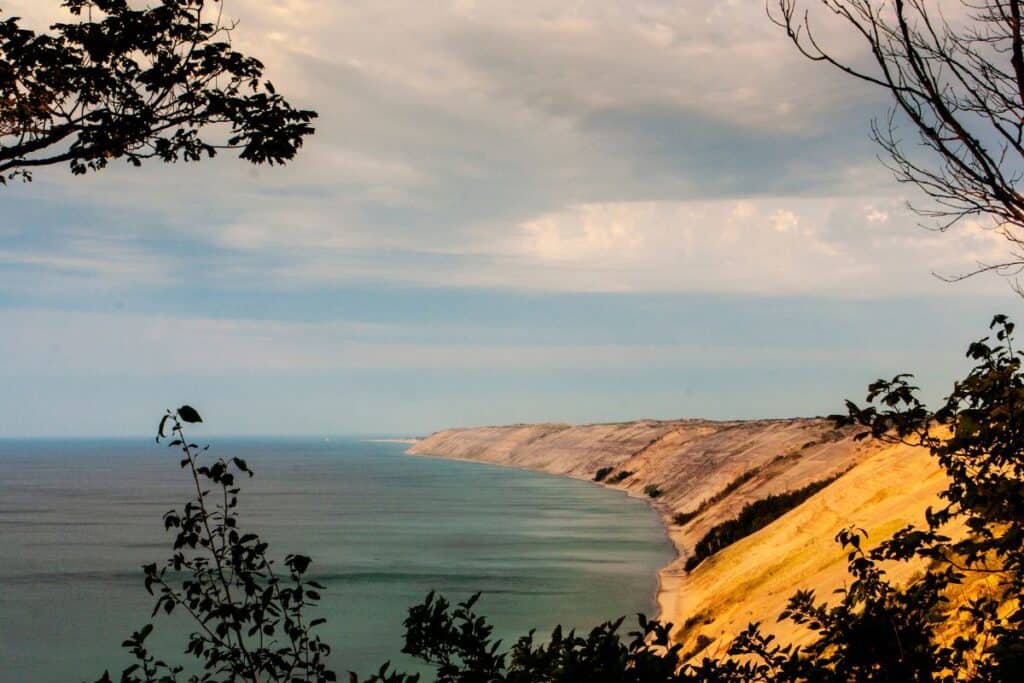
The specific combination that makes fall at Sleeping Bear different from anywhere else in Michigan: the beech-maple forest on the bluffs above Lake Michigan turns while the water is still deep blue and warm enough to reflect the light. You’re not just looking at fall color in the woods — you’re looking at fall color above one of the largest and clearest freshwater lakes in the world. The contrast is something you don’t get anywhere else in the Midwest.
A few other things working in fall’s favor: hiking the dunes in 60°F air is incomparably better than 85°F. Hotel and rental rates drop after Labor Day. You can get a campsite. And the Platte River salmon run brings one of Michigan’s most spectacular natural events right through the middle of the park.
When Does Fall Color Peak at Sleeping Bear Dunes?
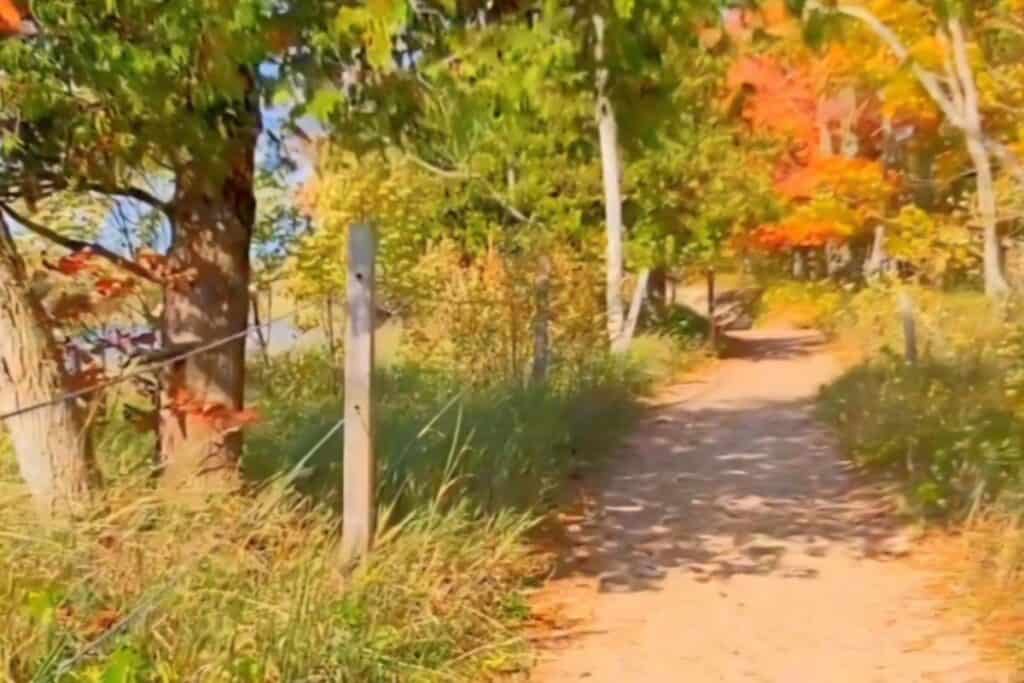
Plan for mid-to-late October — and expect it to run slightly later than what you might see posted on statewide fall color maps. Lake Michigan is a massive thermal mass that holds summer heat well into fall, moderating temperatures along the immediate shoreline and delaying color change by roughly one to two weeks compared to inland areas at the same latitude. By the time Traverse City proper is at 70% color, the bluffs at Sleeping Bear are often just starting their best weeks.
A useful rule of thumb: the third week of October is a reliable target, with peak color sometimes running as late as the last weekend of October in years with a warmer fall. The interior forests — Alligator Hill, the beech-maple sections of Pyramid Point — tend to peak slightly earlier than the open dune-edge areas. Check the Michigan fall color report in late September and use it as your starting point, then add 7–10 days for the Sleeping Bear shoreline specifically.
Don’t overlook September. The color isn’t peak yet, but the salmon are running, the crowds are gone, the water is still warm enough for a lake swim, and the light in September is some of the best of the year. September at Sleeping Bear is genuinely underrated — and a lot of people who know the park well consider it the sweet spot.
Best Spots for Fall Color at Sleeping Bear Dunes
Alligator Hill Trail
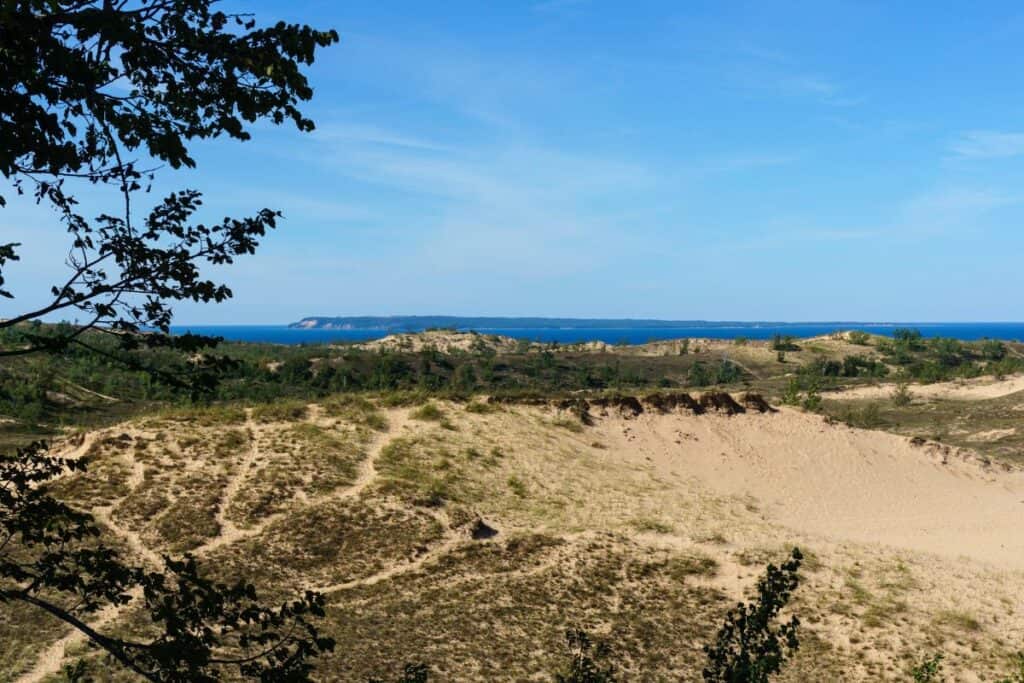
Alligator Hill is the best fall hike in the park — and it’s consistently undervisited compared to Pyramid Point and Empire Bluff. The trail system has several loops ranging from 2.3 to 6 miles through a hilly, heavily forested ridge with views of both Lake Michigan and Big Glen Lake. In October, the forest here turns red and gold above clear green lake water on both sides of the ridge — it’s a visual that feels like it should be on a Michigan tourism poster. The longer loops include rugged terrain that’s genuinely more interesting in fall than summer. Equestrians are also welcome here — the only trail in the park open to horses. Trail starts off M-22 near Glen Arbor.
Pierce Stocking Scenic Drive
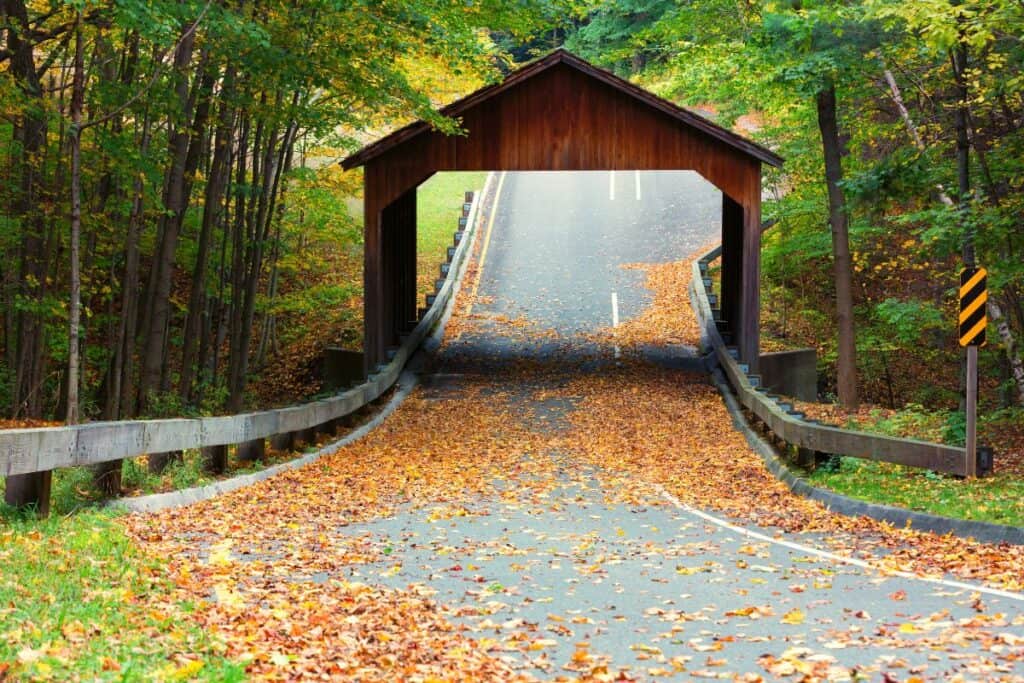
The covered bridge at the entrance to Pierce Stocking Scenic Drive is one of the most photographed fall color spots in northern Michigan — the wooden bridge framed by peak foliage is the quintessential Sleeping Bear fall image. From there, the 7.4-mile loop passes through beech-maple forest and open dune edges, with views of North Bar Lake and Glen Lake along the way before arriving at the Lake Michigan Overlook at Stop 9.
One important timing note: Pierce Stocking Scenic Drive closes to vehicles in late October or early November (exact date varies by year — confirm at nps.gov/slbe before you go). If your fall visit is the last week of October, call ahead. The drive remains open for hiking and walking during the vehicle closure, so you can still access it on foot even after the gates close.
Pyramid Point Trail
Most people hike Pyramid Point in summer and turn around at the overlook. The reason to do the full 2.7-mile loop at Pyramid Point is the fall color in the back section — century-old beech-maple forest that turns in mid-October and gets almost no visitors once the summer crowds leave. The full loop has the best forest color of any trail in the park, and in early October you’ll often have it entirely to yourself. Budget 1.5–2 hours and do the whole thing.
Empire Bluff Trail
The highest-rated hike at Sleeping Bear on AllTrails (4.8 stars, 4,000+ reviews) is a 1.5-mile round trip through gradual forest to a boardwalk overlook above Lake Michigan near Empire. In fall, the forest on the approach to the overlook turns while the view at the end stays the same brilliant blue. It’s one of the few spots in the park where you get fall color and a Lake Michigan overlook in the same short hike. Trailhead off Wilco Rd, about a mile east of Empire on M-72.
Good Harbor Bay Beach
Most people stop thinking about beaches in September. Don’t. Good Harbor Bay in September and early October is one of the most peaceful places in the park — the water is still relatively warm, the sand is empty, and the forest behind the dunes is starting to turn. The Good Harbor Bay trail loop is nearly flat, just under 3 miles, and winds through low coastal dunes, forest, and wetlands. It’s the easiest significant trail in the park and genuinely lovely in fall light.
The Platte River Salmon Run
The Platte River runs through the southern section of Sleeping Bear Dunes National Lakeshore and empties into Lake Michigan at Platte River Point. It’s also one of the most historically significant salmon rivers in the Great Lakes — coho salmon were first introduced to the Great Lakes in 1966 when smolts were stocked in two Lake Michigan tributaries, and the Platte River was one of them. The DNR still operates the Platte River State Fish Hatchery on the upper river, the main salmon hatchery for the upper Great Lakes.
In fall, both coho and Chinook salmon run the Platte on their spawning migration:
- Coho salmon: Mid-August through end of September — the prime window. Fish stage in Platte Bay before pushing upriver.
- Chinook (king) salmon: September through early October. Larger fish, less predictable timing, worth checking current reports.
You don’t need to be an angler to appreciate the salmon run. Standing at the Platte River mouth at Platte River Point in September and watching salmon push through the shallow current is one of those only-in-Michigan moments that most visitors never know is happening. Kids especially — seeing a 10-pound fish fight its way upstream a few feet from where you’re standing is genuinely memorable. A Michigan fishing license is required if you’re actually fishing; just watching costs nothing.
The Platte River Campground sits right along the river — if you’re timing a fall camping trip, this is the campground to choose. See the full Sleeping Bear Dunes camping guide for booking details.
A Fall Weekend at Sleeping Bear Dunes
Two days in mid-October covers the highlights without feeling rushed. Here’s how I’d plan it:
Day One
- Morning: Hike Alligator Hill before the light gets flat — the views of Big Glen Lake in morning October light are some of the best in the park and then take in the bay view at Glen Haven Historic Village
- Midday: Lunch in Glen Arbor — Cherry Republic, Boone Docks, or Art’s Tavern depending on your preferences
- Afternoon: Pierce Stocking Scenic Drive — photograph the covered bridge at the entrance, stop at the Glen Lake overlook, and end at Stop 9 for the Lake Michigan view
- Evening: Bonfire at Good Harbor Bay Beach — September and October evenings here are cool, clear, and quiet. Bring layers.
Day Two
- Morning: Full loop at Pyramid Point — do the entire 2.7 miles, not just the overlook. The beech-maple forest in fall is the payoff.
- Midday: Drive to Platte River Point — watch the salmon run if timing is right (September visits especially), or walk the beach at Platte River Point which is nearly empty in fall
- Afternoon: Empire Bluff Trail — short enough to do at the end of a full weekend, with a view that earns the drive home
- Before you leave: Stop at the Philip A. Hart Visitor Center in Empire for trail maps and current conditions if you haven’t already
Practical Tips for a Fall Visit
- Confirm Pierce Stocking’s vehicle closure date before you go — it closes late October or early November and the exact date shifts by year. Check nps.gov/slbe or call 231-326-4700.
- Layers are not optional. October mornings at Sleeping Bear run 35–45°F before the sun gets up. By midday you may be in a t-shirt. Pack for both.
- Book campgrounds early even in fall. D.H. Day and Platte River remain reservable through mid-to-late October and fill up on fall color peak weekends. Reserve at recreation.gov.
- Fall color is weather-dependent. A warm, wet September delays color. An early hard frost accelerates it. Check the Michigan fall color report in late September and adjust your timing.
- Download maps before you go. Cell service is unreliable at Pyramid Point and along parts of the Alligator Hill trail system.
- Michigan fishing license required if you’re fishing the Platte River salmon run. Buy online at michigan.gov/dnr/licenses.
- Park pass still required. $25/vehicle 7-day or $45 annual — the Michigan Recreation Passport is not valid here.
Frequently Asked Questions
Fall color at Sleeping Bear Dunes typically peaks mid-to-late October — about one to two weeks later than inland areas at the same latitude. Lake Michigan’s thermal mass holds summer heat longer, delaying the color change along the immediate shoreline. The third week of October is a reliable target, with peak color sometimes running into the last weekend of October in warmer years.
Alligator Hill is the top fall hike — multiple loop options through forest with views of Big Glen Lake and Lake Michigan. The full Pyramid Point loop has spectacular beech-maple forest color in the back section. Empire Bluff Trail combines forest color with a Lake Michigan overlook in a short 1.5-mile round trip. Pierce Stocking Scenic Drive offers the covered bridge and multiple fall overlooks.
Yes — the Platte River runs through the southern section of the park and has historically significant coho and Chinook salmon runs every fall. Coho run mid-August through end of September; Chinook run September through early October. You can watch salmon push through the shallow current at Platte River Point without a fishing license — it’s one of the most memorable natural events at the park.
More Sleeping Bear Dunes Guides
- Sleeping Bear Dunes Complete Visitor Guide — everything you need to plan a full trip
- Sleeping Bear Dunes Overlook — what changed in 2025 and what to expect now
- Pyramid Point Trail Guide — the best fall hike in the park
- Sleeping Bear Dunes Camping Guide — D.H. Day, Platte River, and how to book
- Sleeping Bear Dunes Bonfires — the best way to end a fall day at the park
- Sleeping Bear Dunes in Winter — if fall gets you hooked, come back in January
- About Jill
- Recent Michigan Travel Tips

Jill Halpin is a Michigan travel expert and founder of MyMichiganBeach.com. She has been sourced by The Washington Post and featured in The Detroit News and Detroit Free Press, and appears regularly on WDIV Detroit, FOX 2 Detroit, FOX 17 West Michigan, FOX 32 Chicago, WGN Chicago, and NewsNation — 60+ television appearances to date. She holds an MLIS from Wayne State University and is a Library of Congress Information Science Fellow. See all media features.