
The Agate Beach Everyone Overlooks in Michigan
Last Updated: October 2026
Finding agates in Michigan comes down to one thing: standing on the right Lake Superior gravel at the right moment. You do not need a secret spot, and you do not need to cross into Minnesota — you need exposed pebbles, direct sun, and the morning after a storm. Get those three right and the rest is walking.
Here are the Upper Peninsula beaches worth the drive, how to actually spot an agate, and the collecting rules that carry real fines.
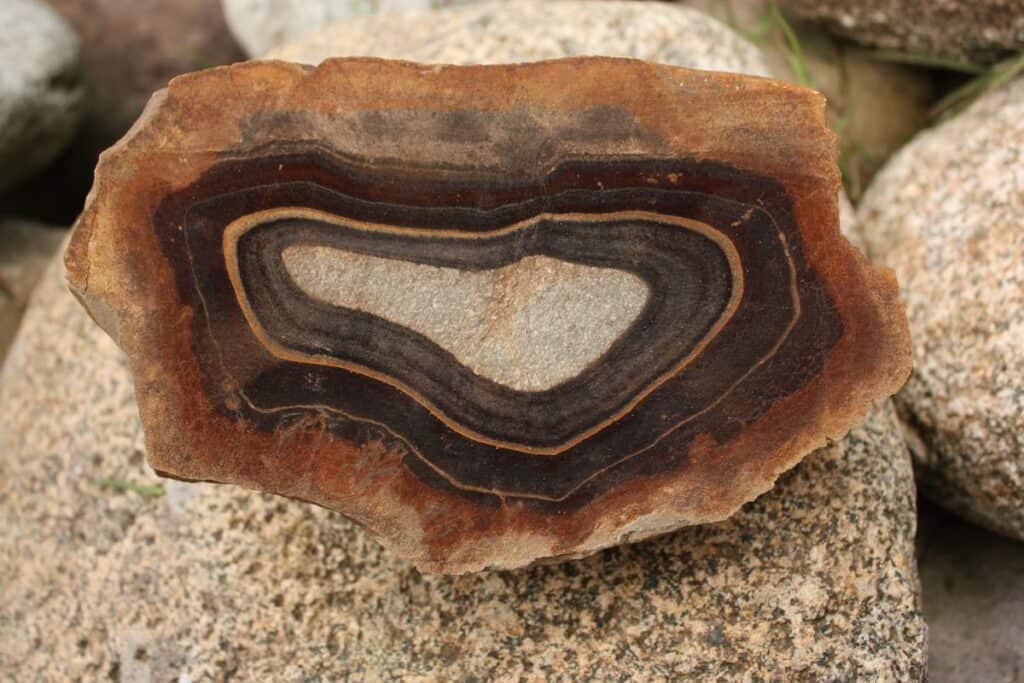
I have been picking rocks off Michigan’s shoreline my whole life, and agates are the ones that keep me walking past the point of good sense. Of everything I have covered across this state, a slow morning on a UP gravel beach is the one I would take over almost any of it.
💎 At a Glance: Agate Hunting in Michigan
- 🏆 Best overall beach: Little Girl’s Point near Ironwood — more rock per foot than anywhere on the lake
- 👨👩👧 Best for beginners: Grand Marais — a famous, easy-access beach with Woodland Park campground next door
- 💎 Best for variety: Hunter’s Point and Eagle River on the Keweenaw Peninsula
- ⏰ Best time: A sunny morning the day after a storm — early spring or late fall
- 🔍 What to look for: Rounded, egg-shaped, waxy and translucent — never flat, never sharp-cornered
- ⚖️ Legal limit: 25 lbs per person per year on state-owned and public-trust land, enforced by the DNR
- 🚫 Never collect at: Pictured Rocks, Sleeping Bear, Isle Royale, or any National Park Service land — $500 fines and one-year bans were handed out in 2025
Map of Michigan’s Best Agate Beaches
Every beach below is pinned on the map. Tap a marker for the location, then read on for what makes each one worth the drive.

Pro tip: Hunt with a light touch. Don’t dig up or churn the beach more than you need to, and leave plenty behind. These spots stay good year after year only because most people take a few and move on.
What Is a Lake Superior Agate?
A Lake Superior agate is a banded stone made mostly of chalcedony, a microcrystalline form of quartz, that formed inside gas pockets in ancient lava. As the lava cooled it left cavities behind. Silica-rich water seeped in over an unimaginable stretch of time and laid down band after band, with different minerals tinting each layer. Iron is what gives Lake Superior agates their signature rust-red and orange.
Eventually the surrounding lava weathered away, freeing the harder agates — and glaciers scattered them across the region. That is why you find them loose in the gravel instead of locked in bedrock. No two are banded the same way, which is exactly the problem: you cannot stop at one.
While you’re scanning the shoreline, keep an eye out for Yooperlites — fluorescent rocks along this same Lake Superior shore that glow orange under UV light after dark.

How to Find Lake Superior Agates: 6 Tips
You may have read that you need to get to the north shore or the Apostle Islands to find agates. Not true. The Michigan UP shoreline is full of them — you just have to work the beach correctly. This is what actually moves the needle.
- Pick gravel, not sand. Agates hide among pebbles. A pure sand beach is beautiful and nearly hopeless — if you can’t see rock, keep driving
- Go on a sunny day. Agates have a waxy, glassy luster that catches direct light. Overcast flattens everything into the same gray
- Hunt the morning after a storm. Big waves churn up and deposit fresh rock. Being first on the beach after the weather clears is the single biggest advantage you can give yourself
- Walk with the sun at your back. The glint is far easier to catch — and you’ll spot stones on the return leg that you walked straight over on the way out
- Wet the rock before you dismiss it. A spray bottle or a quick dip pulls out banding and color that a dry, weathered agate hides completely on the outside
- Dig when the beach is picked over. If someone beat you to it, stop walking. Sit down at a quartz-heavy patch with a small shovel and work through the gravel layers instead
One honest admission: I am a walker, not a digger. I would rather stroll the waterline with a mesh bag until my back tells me to stop. But every time I have made myself sit down and excavate a promising patch, I have been rewarded — so do as I say, not as I do.
Pro tip: How to identify an agate: shape gives it away. Agates form inside rounded cavities, so they come out egg-shaped or roughly ball-shaped — never flat, never sharp-cornered. Look for a waxy, translucent surface with small pock marks. If it’s angular, it’s not an agate.

Can You Legally Collect Agates in Michigan?
Yes — with a hard limit most guides skip. You may remove no more than 25 pounds of rock, mineral specimens, or invertebrate fossils per person, per year from Michigan state-owned and public-trust land, which includes Great Lakes shoreline up to the ordinary high-water mark. That is a total annual figure — not per beach, not per trip, not per type of stone. The rule is spelled out on the state’s rockhounding page.
It is enforced. The DNR has confiscated oversized hauls — including a 93-pound Petoskey stone somebody dragged out of Lake Michigan near Northport, which now sits in a DNR evidence room.
The bigger trap is where you hunt. Collecting is illegal on all National Park Service land — in Michigan that means Pictured Rocks National Lakeshore, Sleeping Bear Dunes National Lakeshore, and Isle Royale. In July 2025, rangers on a marine patrol at Pictured Rocks caught four visitors who had carved letters into the cliffs and gathered more than 100 pounds of rock to take home. Each was fined $500 and banned from the park for a year, and one paid another $250 for the rock collecting alone. Rangers do enforce it.
| Land type | Can you collect? |
|---|---|
| State parks & state land (Muskallonge Lake) | ✅ Yes — 25 lbs per person per year |
| Great Lakes shoreline to the high-water mark | ✅ Yes — same 25 lb annual limit |
| County parks (Little Girl’s Point) | ✅ Generally yes — obey posted rules |
| National forest (Hiawatha, Ottawa) | ⚠️ Different rules. The forest permits rock and gravel removal separately, so call the Hiawatha supervisor’s office at (906) 428-5800 before taking more than a pocketful |
| Nature preserves (Vermilion Point) | ⚠️ Private conservation land. Quiet recreation only — tread lightly, obey closures, take very little |
| National Lakeshore (Pictured Rocks, Sleeping Bear) | 🚫 No — illegal. Fines and bans enforced |
| Private property | ✅ With the owner’s permission — no limit |
One small bright side: sea glass, beach glass, and slag glass are treated as litter rather than minerals, so the 25-pound limit doesn’t apply to those. And the limit is a good reason to be choosy — keep the keepers, put the rest back.

Best Agate Beaches in Michigan’s Upper Peninsula
These are the beaches I come back to, running roughly west to east. The western UP and the Keweenaw Peninsula are the richest agate country in the state — but there is good hunting all the way east to Whitefish Bay.
Little Girl’s Point — Near Ironwood (Western UP)
Little Girl’s Point is my favorite agate beach in Michigan. It’s a Gogebic County park north of Ironwood, right up near the Wisconsin border, and it has more rock per foot of shoreline than anywhere else I have walked on Lake Superior — with real variety in what turns up. Even on a slow agate day you will fill a bag with stones worth tumbling. There’s a county campground with electric sites directly behind the beach, which makes it an easy basecamp.
📍 Little Girl’s Point Park, Gogebic County, north of Ironwood on County Road 505.
Agate Beach — Toivola
Agate Beach earns its name, and there’s a bonus: glowing Yooperlites turn up here after dark, so bring a 365nm UV light and stay past sunset. The adjacent campground has tent, electric, and primitive sites right on Lake Superior — you can walk from your tent to the gravel in about a minute.
📍 42870 Agate Beach Rd, Toivola, MI 49965 — roughly 25 miles southwest of Houghton.
Misery Bay — Toivola
Don’t let the name put you off — Misery Bay is anything but, for a rockhound. You can swim here, but it’s the gravel that draws people. Go in early spring or late fall when the beach is quiet and hasn’t been combed over by a summer’s worth of visitors.
📍 Misery Bay Rd, Toivola, MI 49965 — just down the road from Twin Lakes State Park.
Eagle River Beach — Keweenaw Peninsula
Eagle River’s red, rocky shoreline is a direct nod to the area’s copper and iron history, and the beach is split in two by the river itself. When the water runs low enough to cross near the lake, you can work both halves in one visit. It’s a natural stop on the drive up the Keweenaw.
📍 Eagle River, MI 49950 — beach access in the village, off M-26.
Hunter’s Point Park — Copper Harbor
At the very tip of the Keweenaw, Hunter’s Point Park wraps around Copper Harbor with a huge pebbly shoreline running in both directions. The views out over the open lake are among the best on this list, and the hunting matches the scenery. If you’re staying a few days, our guide to where to stay on the Keweenaw covers Copper Harbor and the drive up.
📍 Hunter’s Point Park, Copper Harbor, MI 49918.
Calumet Waterworks Park — Calumet
An easy local favorite a short drive from McLain State Park. Calumet Waterworks gives you fresh Lake Superior gravel with no hike in, which makes it a good quick stop if you’re already in the Calumet area and have an hour to kill.
📍 Lakeshore Dr, Calumet, MI 49913 — off Highway 203.

More Places to Find Lake Superior Agates
Grand Marais — Agate Beach
Grand Marais is the most famous agate town on Michigan’s Lake Superior shore, with a long, varied beach and a real reputation for the occasional monster find. You’ll also turn up green-and-pink unakite here.
One critical warning: Grand Marais sits right against Pictured Rocks National Lakeshore, and the boundary is not obvious from the sand. Collecting is illegal the moment you cross into the national lakeshore. Keep to the public Agate Beach, watch the signage, and if you cannot tell where you’re standing, don’t pocket the rock.
For 24 years, the first stop in town was the Gitche Gumee Agate and History Museum, and after it closed in 2022 the stop became Karen Brzys’s Agatelady Rock Shop out on Newberg Road. Karen — the Agatelady, and the person who taught a generation of rockhounds what they were holding — died in May 2026, and the shop closed with her. Her books on Lake Superior agates are still the best identification guides there are; her site says they’ll be available for a limited time through agateladyrockshop.com. If you find a good one on this beach, she’s the reason you know what it is.
📍 Agate Beach, Grand Marais, MI 49839 — camp next door at Woodland Park.
Muskallonge Lake State Park — Newberry
Muskallonge Lake State Park sits on a narrow strip between an inland lake and Lake Superior, and it’s a rockhound institution — the park’s September “Rock On!” agate show ran here for years. Camp on the grounds, wake to the waves, and walk the rocky Superior beach out front. A lot of serious hunters found their first agate here. It’s also state land, so the 25-pound rule applies cleanly.
📍 30042 CR 407, Newberry, MI 49868 — Michigan Recreation Passport required ($15 a year on a Michigan plate, $12 a day for out-of-state vehicles).
Vermilion Point — Paradise (Tread Carefully)
Vermilion Point is remote, beautiful, and agates do wash ashore here during storms — but you need to understand what this place is before you go. It is a 175-acre Little Traverse Conservancy nature preserve with 9,240 feet of Lake Superior frontage, not state land. It is open to the public for quiet recreation, and rock hunters do walk it.
It is also federally endangered piping plover nesting habitat, which changes how you behave there. Obey every posted nesting closure. Dogs are banned from May 1 through August 15 and must be leashed the rest of the year. Motorized vehicles, hunting, and campfires are all prohibited. Take very little, disturb nothing, and if the beach is closed, turn around. The conservancy posts the current rules on its Vermilion Point preserve page.
The road in is rough sand and gravel and can flood — four-wheel drive is strongly recommended, and it’s a long way from help. From Paradise, go north on N. Whitefish Road for 5.2 miles, then left on Vermilion Road and straight through the junctions for about 8.6 miles.
📍 17532 N. Vermilion Rd, Paradise, MI 49768.
Bay Furnace — Munising
The campground beach at Bay Furnace is mostly sand, so walk a way along the shore before you start looking — the gravel is there, just not right at the parking lot. It makes a solid base for a rockhounding weekend, and divers know these waters for the Alger Underwater Preserve. The campground is Hiawatha National Forest land, so the state 25-pound rule doesn’t apply; see the table above.
📍 Bay Furnace Campground, M-28, Munising, MI 49862.
Want more than agates? Our full guide to rock hunting in Michigan covers Petoskey stones, Yooperlites, Leland Blues, and beach glass across all four shorelines.
Bonus: Lake Superior Agates Across the Border
If you’re truly agate-obsessed, Minnesota’s North Shore holds some of the best hunting outside Michigan — Beaver Bay, Gooseberry Falls State Park, Grand Portage, and the Gunflint Trail are all worth folding into a bigger Lake Superior loop. Just note that Minnesota has its own collecting rules; don’t assume the Michigan limit travels with you.
When Is the Best Time to Find Agates?
A sunny morning the day after a storm. That’s the whole answer. Wave action exposes and deposits fresh rock, and direct light makes an agate’s waxy surface glint in a way overcast never will.
Beyond that, early spring and late fall are the seasons. The beaches are quiet, the gravel hasn’t been picked over by a season of visitors, and spring ice break-up pushes rock ashore that has been locked in place all winter. Any time of year, your odds rise the moment you’re the first person on fresh gravel after rough water.
The Michigan Traveler
The best agate mornings follow a Superior gale, and those don’t announce themselves very far ahead. When a big blow is coming through the UP, or a beach rule changes, I put it in the email I send to about 14,000 Michigan travelers, along with the shoreline trips I’m actually taking. If you’d rather hear about it before the gravel gets picked over, come along.
Agate Hunting FAQ
Where is the best place to find agates in Michigan?
The western Upper Peninsula and the Keweenaw Peninsula have the richest agate hunting in Michigan. Little Girl’s Point near Ironwood is the top pick for sheer rock density, and Grand Marais is the most famous and the most beginner-friendly. Realistically, any Lake Superior beach with exposed gravel is worth a walk.
How do you identify a Lake Superior agate?
Look for a rounded, egg-shaped stone with a waxy, translucent surface and small pock marks. Agates form inside cavities, so they are never flat or sharp-cornered — shape is the fastest filter. Wetting the rock often reveals banding that a dry, weathered exterior hides completely. Red and orange tones come from iron.
When is the best time to hunt agates on Lake Superior?
A sunny morning right after a storm is best — waves wash in fresh rock and direct light makes agates glint. Early spring and late fall are also excellent, since the beaches are quiet and far less picked over than in summer. Aim to be first on the gravel once the weather clears.
Is it legal to collect agates in Michigan?
Yes, with limits. You may remove up to 25 pounds of rock per person per year from Michigan state-owned and public-trust land, including Great Lakes shoreline. It is a total annual limit, not per beach, and the DNR enforces it. Collecting is illegal in national parks and lakeshores such as Pictured Rocks and Sleeping Bear Dunes, and requires permission on private property.
Can you collect rocks at Pictured Rocks National Lakeshore?
No. Collecting rocks, agates, or any natural material is illegal anywhere managed by the National Park Service, which includes Pictured Rocks National Lakeshore. In 2025 four visitors who gathered more than 100 pounds of rock and carved into the cliffs were each fined $500 and banned for a year. If you’re hunting near Grand Marais, stay on the public Agate Beach and out of the lakeshore boundary.
What is a Lake Superior agate made of?
Lake Superior agates are made mostly of chalcedony, a microcrystalline form of quartz. They formed when silica-rich water filled gas pockets in ancient lava and deposited colorful bands over time. Iron and other minerals tint the bands, which gives Lake Superior agates their characteristic red and orange coloring.
Is the Gitche Gumee Agate Museum still open?
No. The Gitche Gumee Agate and History Museum in Grand Marais closed in 2022 after 24 years, and owner Karen Brzys ran the Agatelady Rock Shop on Newberg Road until her death in May 2026. The shop has closed. Her agate identification books remain available for a limited time through agateladyrockshop.com.
Get Out There
The best agate I ever found came on an unremarkable gray morning at Little Girl’s Point, about ten minutes after I had decided to head back to the car. That’s the thing about this — the lake always seems to hand you one more reason to keep walking.
Grab a mesh bag, watch the weather, respect the 25-pound rule, and go see what Superior left for you. If the agates don’t turn up, stay for dark: the same gravel is Yooperlite country, and a UV light turns a slow day into a different hunt.
- About Jill
- Recent Michigan Travel Tips

Jill Halpin is a Michigan travel expert and founder of MyMichiganBeach.com. She has been sourced by The Washington Post and featured in The Detroit News and Detroit Free Press, and appears regularly on WDIV Detroit, FOX 2 Detroit, FOX 17 West Michigan, FOX 32 Chicago, WGN Chicago, and NewsNation — 60+ television appearances to date. She holds an MLIS from Wayne State University and is a Library of Congress Information Science Fellow. See all media features.