
Best Places to Connect with Nature in Michigan: A Local’s Guide
Last Updated: April 2026
Michigan has been my backyard my entire life, and I still find new places to explore every season. The state’s natural range is genuinely staggering — 3,000 miles of Great Lakes shoreline, more than 300 waterfalls, 11,000 inland lakes, ancient sand dunes, old-growth forest, wild rivers, and a dark sky sanctuary in the middle of Lake Michigan. This guide covers the places I come back to most, organized by what you’re after — whether that’s a world-class waterfall, a quiet nature preserve, a river to paddle, or a lake so blue it doesn’t look real.

📌 In a Nutshell
- Best single experience: Pictured Rocks National Lakeshore — sandstone cliffs by kayak or boat tour from Munising. Nothing in the Midwest compares.
- Best for families: Sleeping Bear Dunes — the Dune Climb, Pierce Stocking Scenic Drive, and Sleeping Bear Bay beaches cover every age and fitness level.
- Best river paddling: Au Sable River near Oscoda — glassy water, wildlife, and a National Wild and Scenic designation.
- Best inland lake: Torch Lake for Caribbean-blue water; Glen Lake near Sleeping Bear for clarity and scenery.
- Best nature preserve: Thorne Swift near Harbor Springs for Lake Michigan beach access; Rosy Mound in Grand Haven for dune and shoreline trails.
- Best for fall color: Au Sable River corridor and Tahquamenon Falls — both peak in late September and early October.
Michigan’s Best Natural Destinations
Tahquamenon Falls — Paradise, MI
Tahquamenon Falls is one of my non-negotiable Michigan recommendations — the kind of place that earns a full day and justifies the drive into the eastern Upper Peninsula. The Upper Falls drops 50 feet across a 200-foot span, making it the largest waterfall east of the Mississippi River, and the amber-colored water stained by tannins from cedar swamps is unlike anything else in the state. Four miles downstream, the Lower Falls splits into five separate cascades around a small island you can reach by rowboat rental.
I’ve visited in summer, fall, and winter, and each season offers something completely different. Fall is the most spectacular — the hardwoods above the river turn in late September, and watching the amber water tumble through orange and red foliage is one of those Michigan moments that’s hard to adequately describe. Michigan has over 300 waterfalls — Tahquamenon is the one I’d put on every list.

Pictured Rocks National Lakeshore — Munising, MI
Pictured Rocks National Lakeshore is the destination I point people toward when they ask me for Michigan’s single most spectacular natural experience. The 42-mile stretch of sandstone cliffs along Lake Superior — stained green, orange, and red by minerals in the rock — rises 50 to 200 feet above the water, and the best way to see them is from a kayak at water level, paddling through sea caves and under natural arches with the full cliff face towering above you.
The guided kayak tours from Munising are excellent — I’ve done both the kayak and the Pictured Rocks Cruise, and both are worth it for different reasons. Early June and mid-September are the windows I’d recommend: fewer crowds and the light on the cliffs in September is extraordinary. The Upper Peninsula rewards everyone who makes the drive.

Sleeping Bear Dunes National Lakeshore — Empire, MI
Sleeping Bear Dunes National Lakeshore is Michigan’s most complete natural destination — and the one I recommend most for first-time visitors to the state. The dunes themselves rise 450 feet above Lake Michigan. The Dune Climb near Empire is the classic entry point, but the real range of the park is what sets it apart: thick hardwood forest, crystal-clear Glen Lake and Crystal River, restored historic villages, and 35 miles of Lake Michigan shoreline.
The Pierce Stocking Scenic Drive is accessible for everyone — 7.5 miles with 12 overlooks, including a view of Lake Michigan from the dune crest that stops people mid-sentence. For hikers, Pyramid Point is my favorite — a 2.6-mile loop to a 375-foot overlook above the lake. Good Morning America named Sleeping Bear “The Most Beautiful Place in America,” and I don’t argue with that.

Warren Dunes State Park — Sawyer, MI
Warren Dunes is southwest Michigan’s best natural destination and one of the most underrated state parks in Michigan. Three miles of Lake Michigan shoreline, dunes rising nearly 300 feet above the lake, and six miles of hiking trails make this far more than just a beach park. It’s located on the southern end of the West Michigan shoreline between New Buffalo and St. Joseph, making it a natural stop on any southern Lake Michigan road trip.
Fall is particularly striking here — the entire dune ridge turns in late October, and the combination of color and lake views is one of the best fall color experiences in the Lower Peninsula without driving north.
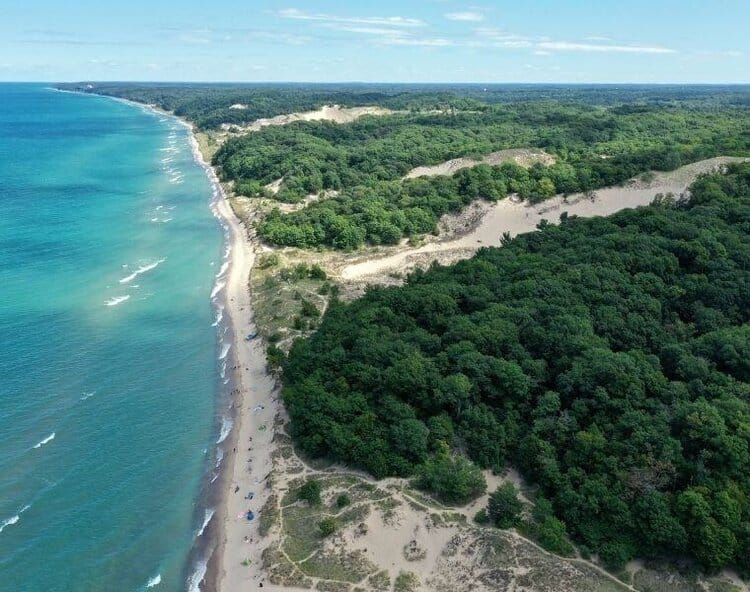
Porcupine Mountains Wilderness State Park — Western UP
The Porcupine Mountains are the Upper Peninsula’s best wilderness destination for serious outdoor lovers. At 60,000 acres with 35,000 acres of old-growth hemlock forest, it’s one of the largest wilderness state parks in the Midwest — and the Lake of the Clouds, perched high above the Carp River Valley in the western UP, is one of the most dramatic views in Michigan. Backcountry camping is excellent. The park also has yurts and cabins for those who want shelter without sacrificing wildness.
Cheboygan State Park — Cheboygan, MI
Cheboygan State Park sits on the shores of Lake Huron and is one of northern Michigan’s quietest gems — a sprawling natural area with miles of hiking trails through forest filled with rare wildflowers, leading to Lake Huron shoreline that sees a fraction of the crowds of the west coast. It’s a perfect add-on to any northern Michigan trip.
Ludington State Park — Ludington, MI
Ludington State Park offers nearly seven miles of Lake Michigan shoreline, towering dunes, hardwood forests, and marshland — all in one park. It’s the most complete state park experience on Michigan’s west coast and consistently ranks among the top state parks in the country. The Skyline Trail runs along the dune ridge above Lake Michigan with views that rival Sleeping Bear at a fraction of the crowds.
Best Hiking Trails in Michigan
Empire Bluff Trail — Empire, MI
Empire Bluff Trail is one of the best short hikes in Michigan — a 1.5-mile round trip from the trailhead to a bluff overlook above Lake Michigan that delivers views I’ve never stopped wanting to photograph. It’s part of Sleeping Bear Dunes and accessible for children and older hikers, which makes it rare — a genuinely spectacular overlook without a brutal climb. Pair it with the Pierce Stocking Scenic Drive for a full day.

Hogback Mountain — Marquette, MI
Hogback Mountain is a legitimate challenge — a strenuous hike that requires some scrambling near the summit with proper footwear. The reward is a panoramic view of Marquette and Lake Superior that makes every difficult step worth it. The trail passes through beautiful tree canopy that filters the light on the way up — one of those hikes where the journey is genuinely as good as the destination.

Crooked Lake Trail — Pinckney, MI
The Crooked Lake Trail is part of the Potawatomi Trail in Pinckney Recreation Area — 5.1 miles through hardwood forest, marshes, and rolling hillsides with views of three inland lakes. It’s one of the best trail options in southeast Michigan and works equally well as a hike or a mountain bike ride. The trail’s terrain is varied enough to be interesting without being punishing.

Best Rivers to Paddle in Michigan
Au Sable River — Grayling to Oscoda, MI
The Au Sable River is a kayaker’s dream — 140 miles from Grayling to Oscoda, where it meets Lake Huron, flowing through the Huron-Manistee National Forest with water that runs clear as glass over a sandy bottom. It carries a National Wild and Scenic River designation, and the wildlife along the banks — blue herons, bald eagles, white-tailed deer — makes every paddle feel like a nature documentary you’re inside of.
You can run it for a few hours or a few days — there are multiple entry and exit points throughout, and the campgrounds along the river are excellent. Fall is my favorite time: the hardwoods along the Au Sable corridor turn in late September, and paddling through that color with the river this quiet is one of Michigan’s genuinely great experiences. See the full Michigan kayaking guide for the best paddling rivers and outfitters.

Big Manistee River — Mesick, MI
The Big Manistee is broad, smooth, and forgiving — ideal for beginners and paddlers who want a leisurely multi-day trip through northern Michigan forest. Like the Au Sable, there are multiple entry points and the river holds exceptional fishing: multiple salmon and trout species plus bass make it a legitimate destination for anglers as much as paddlers. It’s one of the most beloved rivers in the state and consistently recommended by Michigan paddlers as a bucket-list route.
Huron River — Southeast MI
The Huron River runs 130 miles from Oakland County all the way to Lake Erie, flowing through Metro and State Parks including Kensington Metropark — making it one of the most accessible paddling rivers in the state. For southeast Michigan residents who can’t always get north, the Huron delivers real nature close to home: trees, rapids, wildlife, and multiple entry/exit points to customize your trip length. Popular for kayaking, canoeing, and stand-up paddleboarding.

Michigan’s Best Inland Lakes
Burt Lake — Brutus, MI
Burt Lake is one of my favorite inland lakes in Michigan — part of the 40-mile Inland Waterway that flows from Crooked Lake to Lake Huron through some of the prettiest lakes and rivers in the state. The water is crystal-clear, the sandbars are excellent for swimming, and the lake is large enough for boating but calm enough for kayaking and paddleboarding. Fall brings brilliant reds and golds along the shoreline, and the sunsets here are as good as anything I’ve seen on the Great Lakes. Located just outside Petoskey in northern Michigan.
Glen Lake — Glen Arbor, MI
Glen Lake sits in the heart of Sleeping Bear Dunes country and is one of the most beautiful inland lakes in the state. The water is an electric blue — the kind that makes people check to make sure they’re still in Michigan — and it’s an excellent kayaking lake with wooded shoreline and minimal development. Glen Arbor is the small town at its edge, with good food and the kind of northern Michigan character that makes you want to stay longer than planned.

Lake Gogebic — Upper Peninsula, MI
Lake Gogebic is the largest inland lake in the Upper Peninsula — a premier fishing destination for walleye, bass, and northern pike, with rustic cabins along the shoreline and a wilderness character that’s harder to find on the more developed Lower Peninsula lakes. Lake Gogebic State Park offers hiking along the shoreline, and Bond Falls — one of Michigan’s most beautiful waterfalls — is a short drive away, making this a natural anchor for a western UP trip.
Best Nature Preserves in Michigan
Michigan’s nature preserves are some of the most undervisited outdoor spaces in the state — quiet, well-maintained, and free or low-cost to enter. These are the ones I’d point visitors to first, organized by region.
Thorne Swift Nature Preserve — Harbor Springs, MI
Thorne Swift is one of my favorite nature preserves anywhere in Michigan. It sits on the Lake Michigan shore north of Harbor Springs in the Tunnel of Trees corridor, with 30 acres of boardwalk and mulched trails through forest, over swamps, around a pond, and out to a stretch of Lake Michigan beach with dunes. The trails are 1.5 miles, easy and well-maintained, with educational signage throughout. The butterfly-themed kids’ play area at the visitor center is an added bonus for families. Free to visit.
- 📍 6696 Lower Shore Dr, Harbor Springs, MI 49740
- 🌐 landtrust.org
Rosy Mound Natural Area — Grand Haven, MI
Rosy Mound is the best nature preserve on Michigan’s west coast for dune and shoreline hiking. The trail system runs through towering dunes, wooded areas, and wetlands before opening to Lake Michigan beach — and the views from the dune ridge are among the best in West Michigan. It’s located in Grand Haven and pairs naturally with a day at Grand Haven State Park or the boardwalk.
- 📍 13925 Lakeshore Ave, Grand Haven, MI 49417
Kensington Metropark Nature Center — Milford, MI
For southeast Michigan residents, Kensington Metropark is the best accessible nature experience in the region. The nature center sits on the Huron River shoreline with diverse habitats — forest, marsh, open water — and wildlife sightings that regularly include red-tailed hawks, herons, and white-tailed deer. The center’s ambassador hawk, Ranger, is a genuine highlight. Immersive workshops and birdwatching programs run year-round.
- 📍 4570 Huron River Pkwy, Milford, MI 48381
Blandford Nature Center — Grand Rapids, MI
Blandford is a 143-acre urban nature oasis in Grand Rapids with a genuine range of habitats — wetlands, woodlands, open meadows — and resident animals that make it excellent for kids. Year-round educational programs, Sunday morning yoga on the trails, and guided walks make this more than a passive park visit. It’s the kind of place Grand Rapids locals return to weekly.
- 📍 1715 Hillburn Ave NW, Grand Rapids, MI 49504
- 🌐 blandfordnaturecenter.org
Shiawassee National Wildlife Refuge — Saginaw, MI
The Shiawassee National Wildlife Refuge is Michigan’s best birdwatching destination outside of the UP. This nearly 10,000-acre refuge in mid-Michigan encompasses wetlands, marshes, and floodplains that host massive concentrations of migratory waterfowl — bald eagles, pelicans, sandhill cranes, and dozens of other species pass through seasonally. Miles of scenic trails make it accessible for any fitness level.
- 📍 6975 Mower Rd, Saginaw, MI 48601
- 🌐 fws.gov/refuge/shiawassee
Kalamazoo Nature Center — Kalamazoo, MI
The Kalamazoo Nature Center is the most comprehensive nature center in southwest Michigan — 1,100 acres of forest, prairie, and marsh with trails marked by difficulty level, interactive exhibits, and an exceptional program schedule for all ages. The diversity of the trail network means you can come back a dozen times and have a different experience each time.
- 📍 7000 N Westnedge Ave, Kalamazoo, MI 49009

A: Pictured Rocks National Lakeshore and Sleeping Bear Dunes National Lakeshore are Michigan’s two most spectacular natural destinations. For rivers, the Au Sable is the top paddling choice. For inland lakes, Torch Lake and Glen Lake near Sleeping Bear offer Caribbean-clear water. For quiet nature preserves, Thorne Swift near Harbor Springs and Rosy Mound in Grand Haven are excellent.
A: Top Michigan nature preserves include Thorne Swift Nature Preserve in Harbor Springs, Rosy Mound Natural Area in Grand Haven, Kensington Metropark in Milford, Shiawassee National Wildlife Refuge near Saginaw, Blandford Nature Center in Grand Rapids, and the Kalamazoo Nature Center.
A: Michigan is known for its 3,000 miles of Great Lakes shoreline, more than 300 waterfalls (mostly in the Upper Peninsula), Sleeping Bear Dunes National Lakeshore, Pictured Rocks National Lakeshore, 11,000 inland lakes, and the Au Sable National Wild and Scenic River.
Keep Exploring Michigan’s Natural Beauty
The list above is a starting point — Michigan’s natural range is deep enough that you could spend years exploring it and still find places you’ve never been. For more specific planning by activity or region:
- Michigan Kayaking Guide — 15 best paddling destinations with outfitter info
- Michigan Waterfalls Guide — 31 must-see waterfalls across the state
- Michigan National Parks — Sleeping Bear, Pictured Rocks, Isle Royale, and more
- Upper Peninsula Travel Guide — full planning guide for a UP road trip
- Michigan Fall Color Guide — when and where to catch peak color by region
- Michigan Dark Sky Parks — the best stargazing destinations in the state
- About Jill
- Recent Michigan Travel Tips

Jill Halpin is a Michigan travel expert and founder of MyMichiganBeach.com. She has been sourced by The Washington Post and featured in The Detroit News and Detroit Free Press, and appears regularly on WDIV Detroit, FOX 2 Detroit, FOX 17 West Michigan, FOX 32 Chicago, WGN Chicago, and NewsNation — 60+ television appearances to date. She holds an MLIS from Wayne State University and is a Library of Congress Information Science Fellow. See all media features.