
Traverse City Michigan Guide: A Local’s Complete 2026 Guide
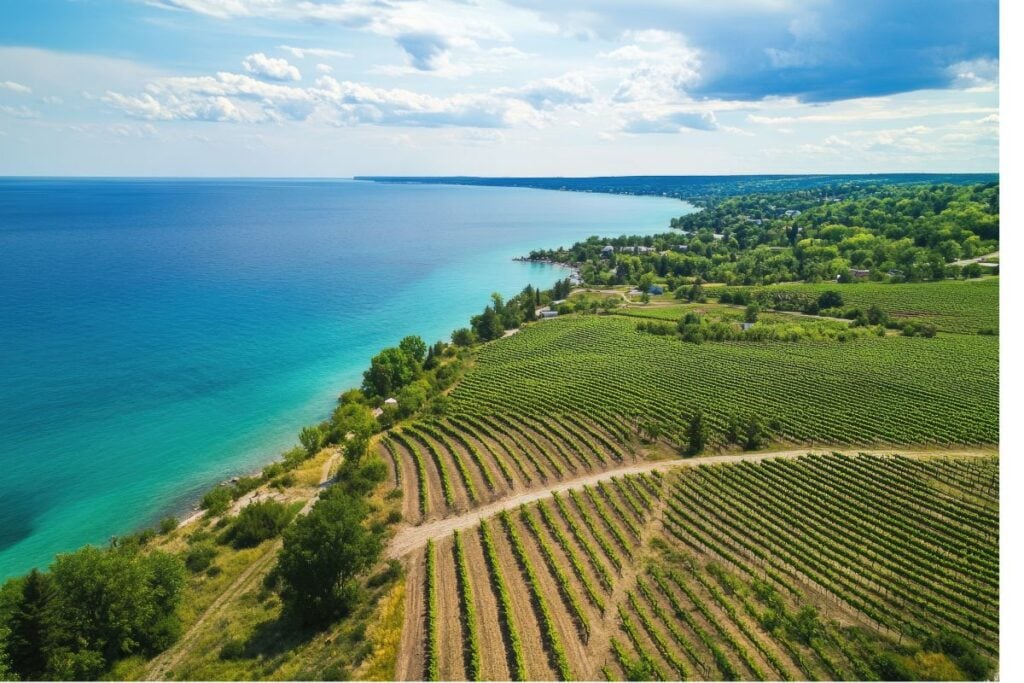
Last Updated: July 2026
This Traverse City Michigan guide covers where to stay, what to eat, and what to do across every season in Northern Michigan’s Cherry Capital, from the wineries on Old Mission and Leelanau to the beaches on Grand Traverse Bay and nearby Sleeping Bear Dunes. Traverse City is a small city of about 15,000 that ranks among the best food and beach destinations in the Midwest, and it rewards a weekend or a full week equally well.
I’ve been coming to Traverse City for years, in every season, and this is the guide I wish I’d had on my first trip. Below you’ll find how to pick the right home base, when to visit for what you actually want, and honest picks for wineries, restaurants, and beaches, with links to my deeper guides when you want the full list. When WDIV asked me to recommend a Northern Michigan getaway, this is the town I sent viewers to first.

📍 At a Glance: Traverse City
- 🏆 Known for: Cherry Capital of the World, 40+ wineries, and one of Eater’s top food destinations for 2026
- 🚗 Drive time: 4 hrs from Detroit, 2.5 hrs from Grand Rapids, 5 hrs from Chicago
- ✈️ Nearest airport: Cherry Capital Airport (TVC), 10 min from downtown, direct flights from Detroit, Chicago, Minneapolis, Denver
- 🏨 Best home base: Downtown for first-timers; East Bay for families; the peninsulas for wine country
- 📅 Best time to visit: Late August–September for warm water and thinner crowds
- 🏖️ Best beach: Clinch Park downtown, or Traverse City State Park on East Bay
- 💰 Budget: Moderate — hotels $100–300/night, dining $15–60, wine tastings $10–20
How to Use This Guide
Traverse City works as a hub. You pick a home base near the water, then day-trip out to the dunes, the wineries, and the Leelanau villages. This guide is organized the way you’d actually plan the trip: when to come, where to sleep, what to do, and where to eat and drink, followed by the day trips and a couple of sample itineraries. Where I have a full standalone guide, I’ve linked it so you can go deeper on wineries, restaurants, or things to do without me repeating all of it here.
⚡ Quick Picks by Interest
- 👨👩👧 Families: Clinch Park beach, Great Lakes Children’s Museum, Tall Ship ice cream cruise, Cherry Bowl Drive-In
- 🍷 Wine & beer: Old Mission Peninsula wineries, Left Foot Charley cider, Traverse City Beer Week in November
- 🐕 Dog-friendly: Boardman River Trail System, Tandem Ciders, many downtown patios in summer
- ♿ Accessible: Clinch Park boardwalk, Pierce Stocking Scenic Drive (car-based dune views), downtown Front Street
- 🍂 Seasonal: Cherry blossoms in May, wine harvest and color in October, snowshoe wine tours in winter
- 🚌 Car-free downtown: Free BATA Bayline loop in summer, walkable Front Street and waterfront
When to Visit Traverse City
Traverse City is a genuine four-season destination, and the season you pick changes the trip completely. Summer brings warm beaches and festivals with the heaviest crowds; fall delivers color and wine harvest with room to breathe; winter is quiet, cheap, and better than its reputation; spring is cherry blossoms and low rates. If you can only come once, aim for late August into September, when the water is warmest and the summer rush has thinned.
| Season | What you get | Crowds |
|---|---|---|
| Summer (Jun–Aug) | Warm beaches, Cherry Festival, long days past 10pm | Peak — book early |
| Fall (Sep–Oct) | Fall color, wine harvest, warm water into September | Moderate |
| Winter (Dec–Mar) | Skiing, snowshoe wine tours, Restaurant Week, lowest rates | Low — best deals |
| Spring (Apr–May) | Cherry blossoms in May, winery patios reopen, morel season | Low — shoulder season |
The National Cherry Festival runs July 4–11 in 2026 — its 100th year — and draws around 500,000 people downtown, with air shows, parades, and fireworks over the bay. If you want the festival, book months ahead. If you want summer without the crush, come the weeks on either side of it. For fall, peak color usually lands mid-October across the wine peninsulas; my Traverse City in fall guide has the timing details. Winter’s Restaurant Week runs February 22–28, 2026, with prix fixe menus at $25, $35, and $45 across dozens of restaurants — the single best value window of the year.
💡 Insider tip: Late August and early September are the sweet spot — the water is at its warmest after a full summer of sun, the crowds thin once school starts, and the evening light turns gold. It’s my pick if you only visit once.
Getting There and Getting Around
Getting to Traverse City is easy from anywhere in the Midwest, and you’ll want a car once you arrive. Most visitors drive: it’s about 4 hours (255 miles) from Detroit, 2.5 hours (160 miles) from Grand Rapids, and 5 hours (300 miles) from Chicago, with the Chicago route running up the Lake Michigan coast through the M-22 corridor on the final stretch. If you’d rather fly, Cherry Capital Airport (TVC) is 10 minutes from downtown with direct flights from Detroit, Chicago, Minneapolis, and Denver, most under 90 minutes.
Downtown is walkable and bikeable, and the free BATA Bayline bus loops through town in summer. But the wineries, Sleeping Bear Dunes, the Leelanau villages, and the surrounding beaches all need wheels, so plan on a car for everything beyond the core. If you’re wine tasting, book a tour or line up a designated driver.
💡 Insider tip: Downtown parking is free after 6pm and all day Sunday. During summer days, the lots behind Front Street fill fast — try the side streets off Cass or Park, or park at the Open Space and walk a few blocks.
Where to Stay in Traverse City
Where you stay shapes the whole trip, and Traverse City gives you four distinct home bases. Downtown puts you in walking distance of beaches, restaurants, and Front Street; the East Bay corridor is where the family-friendly chain hotels and the state park beach sit; and the two peninsulas trade walkability for vineyards and quiet. Pick based on whether you want to walk to dinner or wake up in wine country.
| Area | Best for | Price range |
|---|---|---|
| Downtown TC | First-timers, couples, weekend trips | $150–300/night |
| East Bay / US-31 | Families, budget travelers, beach access | $100–200/night |
| Old Mission Peninsula | Couples, wine lovers, quiet | $150–350/night |
| Leelanau Peninsula | Longer stays, nature lovers | $120–300/night |
If it’s your first visit, stay downtown. You can walk to Clinch Park and West End beaches, Front Street shopping, the breweries, and the waterfront, and the Village at Grand Traverse Commons — a restored former state hospital now full of restaurants and shops — is minutes away. The Delamar Traverse City is one of the top lakefront-and-walkable properties in town. Out on Old Mission, inns like Chateau Chantal put you in the vineyards, 15–20 minutes from downtown, which is ideal in fall during harvest.
💡 Insider tip: If you’re visiting during Cherry Festival week (July 4–11), book months in advance — it’s the hardest week of the year to find a room. Many visitors stay in nearby Leelanau County and drive in. For camping, Traverse City State Park books up the moment sites open.

Best Things to Do in Traverse City
The best things to do in Traverse City center on the water, the dunes, and the wine, with a walkable downtown tying it all together. Below are the experiences I’d build a first trip around; for the full rundown with practical details on each, see my complete guide to the 25 best things to do in Traverse City.
Sleeping Bear Dunes National Lakeshore is 30 minutes west and the single can’t-miss day trip — voted the Most Beautiful Place in America, with the Dune Climb, the Pierce Stocking Scenic Drive, and the Empire Bluff trail. Plan a half day minimum. A vehicle pass is required: $25 for seven days or $45 for an annual Sleeping Bear pass. My full Sleeping Bear Dunes guide covers how to skip the entry line and which beaches are worth it.
Beach hopping on Grand Traverse Bay is the everyday pleasure here — Clinch Park downtown, West End on the West Bay, and Traverse City State Park on the East Bay, where the water turns that Caribbean-turquoise color visitors never expect from Michigan. Downtown Front Street anchors the shopping, with Cherry Republic, M22, and the Village at Grand Traverse Commons. And no first trip is complete without sailing the bay on a Traverse Tall Ship — the ice cream cruise is the family favorite.
For getting outside beyond the beaches, the TART Trails and the Boardman River Trail System give you 24 dog-friendly, family-friendly miles right through town, and the Leelanau Trail runs 17 paved miles from Traverse City to Suttons Bay through farms and vineyards. Kayak and paddleboard rentals are easy to find downtown.
👉 For the full list with details and tips: 25 Best Things to Do in Traverse City
The Traverse City Food Scene
The Traverse City food scene punches far above a town of 15,000, and it now has the national recognition to prove it: Eater named it one of just three U.S. entries on its best dining destinations list for 2026. The short version of where to eat: The Cooks’ House is the tiny chef-driven local treasure (its chefs were James Beard finalists in 2025), Trattoria Stella serves some of the state’s best Italian in the old state hospital, and newer arrivals like Modern Bird, Supper, and the seafood spot Umbo have deepened the scene.
For everyday favorites, Farm Club is farm-to-table you can bike to, Grand Traverse Pie Company is the reliable lunch (the pies earn the hype), and The Little Fleet is the downtown food-truck institution. For the full breakdown of where to eat across every budget, see my best restaurants in Traverse City guide.
👉 Full restaurant picks: Best Restaurants in Traverse City
Traverse City Wine Country
Traverse City wine country spreads across two peninsulas that sit on the 45th parallel, the same latitude as Bordeaux, and the cool-climate whites and rosés here are genuinely worth the trip. Old Mission Peninsula packs 18-plus wineries into a narrow, easy-to-navigate strip with bay views on both sides; Leelanau spreads 25-plus wineries across rolling countryside and charming villages. If you only have one day, Old Mission is the more compact choice.
Brys Estate on Old Mission is a favorite — a 155-acre estate with a lavender farm and panoramic views — alongside Chateau Grand Traverse, one of the original family wineries, and Mari Vineyards with its underground tasting room. On the Leelanau side, Black Star Farms offers inn stays right in the vineyard. In winter, snowshoe wine tours at 45 North and Black Star let you trek the snowy vineyards and warm up with a tasting. My Traverse City wineries guide has details on every stop.
💡 Insider tip: Don’t try to do both peninsulas in one day. Plan one peninsula per day so you can actually enjoy the drive and the villages between stops, and book a tour if you’d rather not worry about driving.
👉 Every winery, mapped: 18 Best Traverse City Wineries
Breweries, Cideries and Distilleries
Traverse City’s craft scene runs well beyond wine, with breweries, cideries, and distilleries scattered from downtown out to the villages. Downtown standouts include Workshop Brewing across from the beach, Rare Bird on Front Street, and the long-running Right Brain Brewery. For cider, Left Foot Charley downtown is a must, and Tandem Ciders on Leelanau has the countryside views. Beer Week each November turns the whole scene into a passport event. For the full crawl, see my guide to Traverse City breweries.
👉 Full brewery crawl: Guide to Traverse City Breweries
Best Day Trips from Traverse City
The best day trips from Traverse City put some of Northern Michigan’s most beautiful places within an easy drive. The dunes are 30 minutes, the Leelanau villages 15 to 45, and the iconic scenic drives loop out and back in a day.
| Destination | Distance | Why go |
|---|---|---|
| Sleeping Bear Dunes | 30 min | Dune Climb, Pierce Stocking Drive, Empire Bluffs |
| Glen Arbor | 30 min | Galleries, Cherry Republic flagship, dune gateway |
| Suttons Bay & Leelanau | 15–45 min | Leland’s Fishtown, wineries, Grand Traverse Lighthouse |
| Frankfort | 45 min | Lighthouse, sandy beach, Stormcloud Brewing |
| M-22 Scenic Loop | Full day | One of Michigan’s most iconic drives |
| Petoskey & Charlevoix | 60 min NE | Petoskey stone hunting, harbor towns, shopping |
💡 Insider tip: The M-22 loop is one of the best drives in the state. Head north from TC through Suttons Bay, continue through Leland and Glen Arbor, stop at Sleeping Bear, and loop back through Empire and Frankfort. Give it a full day.
Sample Traverse City Itineraries
The Perfect Weekend (2–3 Days)
Day 1: Settle into downtown, walk Front Street, lunch at Grand Traverse Pie Company, afternoon at Clinch Park, dinner at Trattoria Stella, sunset along the waterfront.
Day 2: Morning at Sleeping Bear Dunes — Dune Climb and Pierce Stocking Drive — lunch in Glen Arbor, afternoon at two or three Old Mission wineries, sunset at the lighthouse.
Day 3: Bike the TART Trail toward Suttons Bay, browse the shops, afternoon kayak on the Boardman River, final dinner at The Cooks’ House or Farm Club.
The Full Week (5–7 Days)
With a week, spread it out: two days downtown for beaches and breweries, a full day at Sleeping Bear, a dedicated Old Mission wine day, a Leelanau and M-22 day through Suttons Bay and Leland, an adventure day of kayaking or a Tall Ship sail, and a slow final morning at the Saturday farmers market before driving out through Frankfort.
Planning Tips and Budget
A few practical things to know before you go. Even in summer, pack layers — Traverse City sits on the 45th parallel, so nighttime lows dip into the 50s in July and August, and Lake Michigan wind can make the beach feel 10 degrees cooler. Budget-wise, it’s moderate for a resort town: camping runs $30–50 a night, mid-range hotels $150–200, and boutique inns $250–400, with dining anywhere from $10–15 casual to $50–80 fine dining and wine tastings $10–20 a stop.
💡 Insider tip: The best budget window is Restaurant Week in late February — multi-course prix fixe menus at the area’s best restaurants for $25 to $45, with hotel rates at winter lows and free snowshoe wine tours running. It’s a fraction of summer pricing for arguably a cozier trip.
Frequently Asked Questions
What is Traverse City known for?
Traverse City is the Cherry Capital of the World, producing a large share of the nation’s tart cherries. It’s also known for its wine country of 40-plus wineries on the Old Mission and Leelanau peninsulas, its Eater-recognized food scene, the turquoise beaches of Grand Traverse Bay, and its role as the gateway to Sleeping Bear Dunes National Lakeshore.
When is the best time to visit Traverse City?
Late August through September is the sweet spot for most visitors — warmest water, thinner crowds, and golden light. Summer has the beaches and the Cherry Festival but the biggest crowds; fall brings color and wine harvest; winter offers skiing, snowshoe wine tours, and the best rates; and May brings cherry blossoms.
How many days do you need in Traverse City?
Plan at least three days for a first visit — enough for downtown, a day at Sleeping Bear Dunes, and a few wineries. Five to seven days lets you explore both wine peninsulas, take day trips to the Leelanau villages, and enjoy the beaches without rushing. A weekend works for a quick getaway, but you’ll want to come back.
How far is Traverse City from Detroit, Grand Rapids, and Chicago?
Traverse City is about 255 miles (4 hours) from Detroit, 160 miles (2.5 hours) from Grand Rapids, and 300 miles (5 hours) from Chicago. Cherry Capital Airport (TVC) also offers direct flights from Detroit, Chicago, Minneapolis, and Denver, most under 90 minutes.
Do you need a car in Traverse City?
Yes, for most trips. Downtown is walkable and has a free summer bus loop, but the wineries, Sleeping Bear Dunes, the Leelanau villages, and the outlying beaches all require a car. If you’re wine tasting, book a tour or use a designated driver.
How much does it cost to enter Sleeping Bear Dunes?
A vehicle pass is required: $25 for a seven-day pass or $45 for an annual Sleeping Bear Dunes pass. The $80 America the Beautiful pass (for US residents) covers all national park sites for a year and is honored here. Passes are sold at the visitor center in Empire and at park entrance points.
Is Traverse City good for families?
Very. Clinch Park has shallow, calm water right downtown, and the Great Lakes Children’s Museum, the Butterfly House, the Tall Ship ice cream cruise, and the Cherry Bowl Drive-In in nearby Honor are all easy family wins. Camping at Traverse City State Park puts you across from a good beach.
What is there to do in Traverse City in winter?
Winter is underrated here: downhill and cross-country skiing, snow tubing, snowshoe wine tours through the vineyards, and Restaurant Week in late February with prix fixe menus at $25–$45. Hotel rates are at their lowest, and the CherryT Ball Drop rings in the New Year downtown.
Which is better for wine, Old Mission or Leelanau?
Old Mission is more compact — 18-plus wineries on one narrow peninsula, easy to hit several in a day with bay views throughout. Leelanau spreads 25-plus wineries across rolling countryside with charming villages between stops, better for a slower, longer visit. If you only have one day, choose Old Mission.
When is the National Cherry Festival?
The National Cherry Festival runs July 4–11 in 2026, marking its 100th year, with air shows, parades, concerts, and fireworks over the bay downtown. It draws around 500,000 visitors, so book lodging months ahead if you’re attending.
Are there dog-friendly things to do in Traverse City?
Yes. The Boardman River Trail System is dog-friendly and runs right through town, many downtown patios welcome dogs in summer, and Tandem Ciders on Leelanau is a relaxed stop with countryside views. The area also has dedicated dog beaches worth seeking out in the warmer months.
Is Traverse City expensive?
It’s moderate for a resort destination. Summer hotels run $100–300 a night, with camping and vacation rentals cheaper. Dining spans $10–15 casual lunches to $50–80 fine dining, and wine tastings average $10–20. Winter and spring bring significantly lower rates, and Restaurant Week offers prix fixe menus from $25.
I keep this guide updated as the town changes — new restaurants, new events, new reasons to make the drive. Traverse City rewards a first visit and a fifteenth one equally: cherry blossoms in spring, turquoise water in summer, blazing color in fall, and snow-covered vineyards in winter. Start planning, and you’ll understand why so many of us keep going back.
Explore More Traverse City and Northern Michigan
- 25 Best Things to Do in Traverse City
- Best Restaurants in Traverse City
- 18 Best Traverse City Wineries
- Guide to Traverse City Breweries
- Complete Guide to Sleeping Bear Dunes
- Guide to the National Cherry Festival
- About Jill
- Recent Michigan Travel Tips

Jill Halpin is a Michigan travel expert and founder of MyMichiganBeach.com. She has been sourced by The Washington Post and featured in The Detroit News and Detroit Free Press, and appears regularly on WDIV Detroit, FOX 2 Detroit, FOX 17 West Michigan, FOX 32 Chicago, WGN Chicago, and NewsNation — 60+ television appearances to date. She holds an MLIS from Wayne State University and is a Library of Congress Information Science Fellow. See all media features.