
Michigan Sand Dunes: The Complete Guide to Where to Find Them & How to Explore Them
Last Updated: July 2026
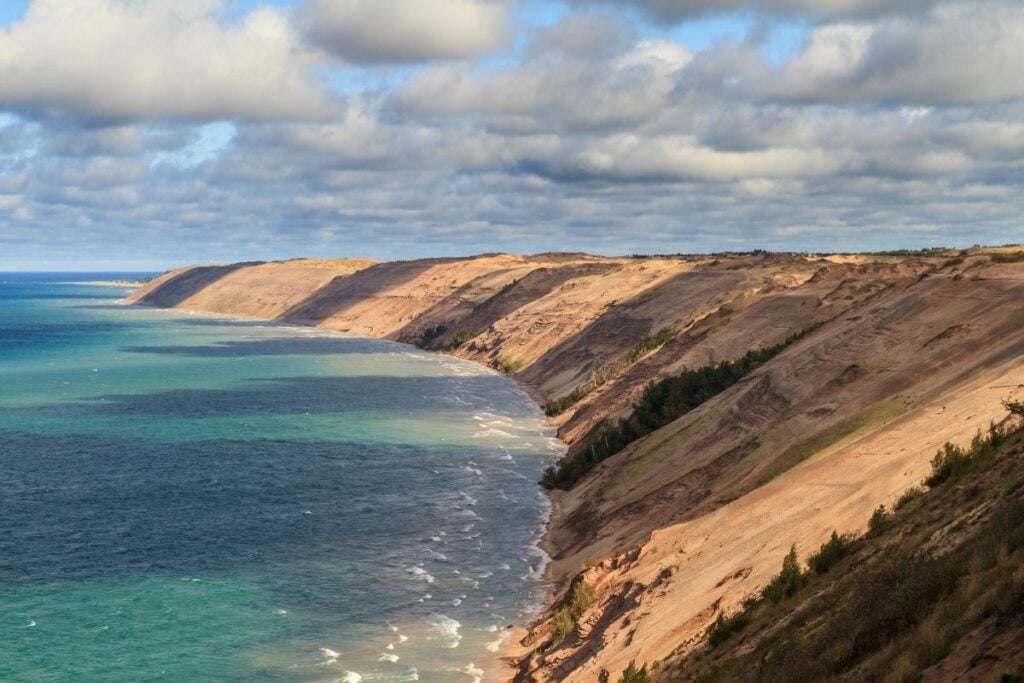

Here’s something a lot of people don’t realize until they see it in person: Michigan has the largest collection of freshwater sand dunes in the world. Not the largest in the Midwest, or the country — the world. They stretch for more than 275,000 acres along our coastlines, they’re visible from space, and they hold their own against any beach I’ve stood on. After years of writing about Michigan’s shoreline, the dunes are still the landscape I send first-time visitors to, because nothing else quite prepares you for a mountain of sand rising straight out of a Great Lake.
This guide covers the best sand dunes across the whole state — where to find them, how to get there, and what to actually do once you arrive. Most people think “Michigan dunes” means Lake Michigan, and that’s where the biggest ones are. But there are dunes on Lake Huron’s Thumb and even on Lake Superior in the Upper Peninsula, and I’ve included those too, because a real statewide dune trip is one of the best road trips in Michigan.
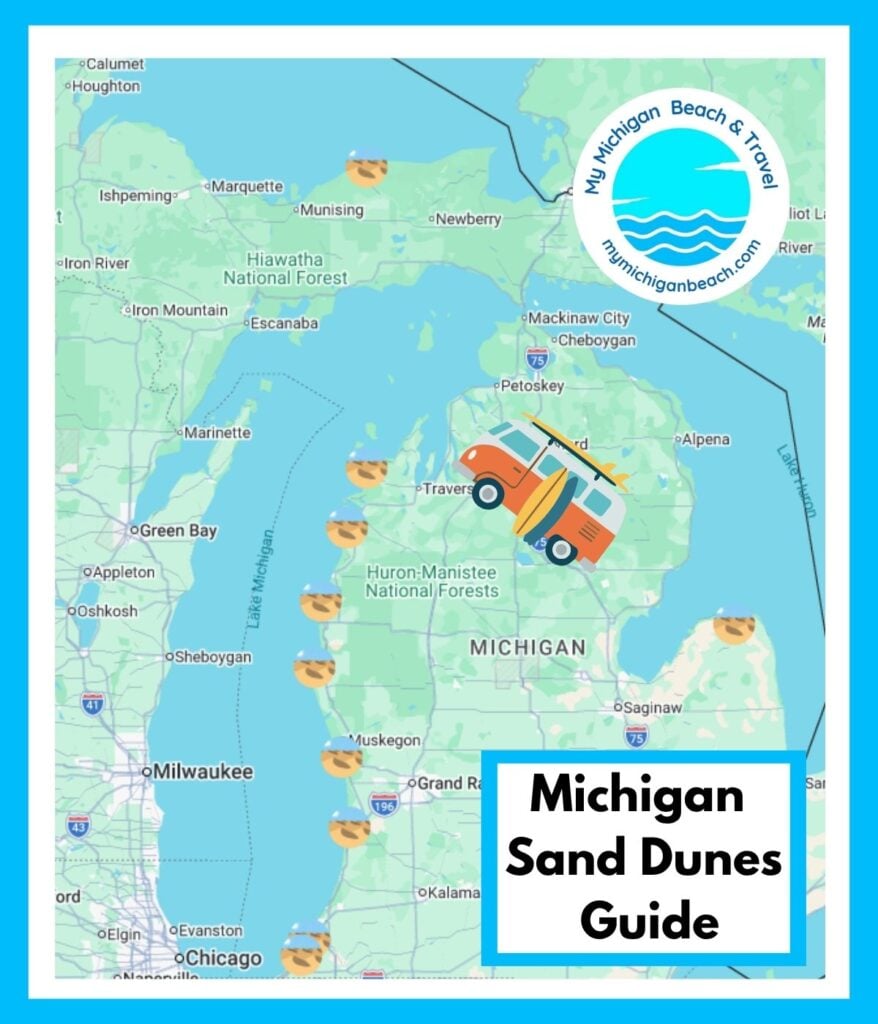
🏜️ Michigan Sand Dunes: At a Glance
- What’s special: The world’s largest freshwater dune system — over 275,000 acres, mostly along Lake Michigan
- Tallest: Sleeping Bear Dunes, with perched dunes rising roughly 450 feet above Lake Michigan
- Only place to drive your own vehicle: Silver Lake Sand Dunes ORV Area — the only one east of the Mississippi
- Two ways to ride without a vehicle: Mac Wood’s Dune Rides (Silver Lake) and Saugatuck Dune Rides
- Beyond Lake Michigan: Port Crescent on Lake Huron’s Thumb, and the Grand Sable Dunes on Lake Superior in the U.P.
- What you’ll need: A Michigan Recreation Passport ($15/year resident) for state park entry; sturdy shoes, water, and sun protection everywhere
- Best season: June–September for beaches and climbing; September–October for fall color over the dunes
Why Michigan Has So Many Sand Dunes
The short version: glaciers, sand, and wind. When the glaciers that once covered Michigan retreated, they left behind enormous deposits of quartz sand. Over thousands of years, the prevailing westerly winds blowing across Lake Michigan picked up that dry sand from the beaches and pushed it inland, piling it into the dunes we see today. That’s also why the biggest, most dramatic dunes are on the eastern shore of Lake Michigan — our side — where the wind carries the sand and drops it.
If you want to sound smart on the dunes, here are the four types you’ll encounter in Michigan:
- Foredunes — the low dunes closest to the water, where grasses first take hold.
- Parabolic dunes — U-shaped dunes stabilized by vegetation, common along the Lower Peninsula’s Lake Michigan shore.
- Perched dunes — dunes sitting high atop a glacial bluff, sometimes hundreds of feet above the water. Sleeping Bear is the classic example.
- Dune and swale — alternating ridges and wet troughs, often forested, usually found away from the big open lakes.
The dunes are also a genuinely rare ecosystem. Plants like Pitcher’s thistle and Lake Huron tansy grow on these shores and almost nowhere else on earth — both are federally threatened. That’s a big part of why staying on marked trails matters so much, which I’ll come back to.
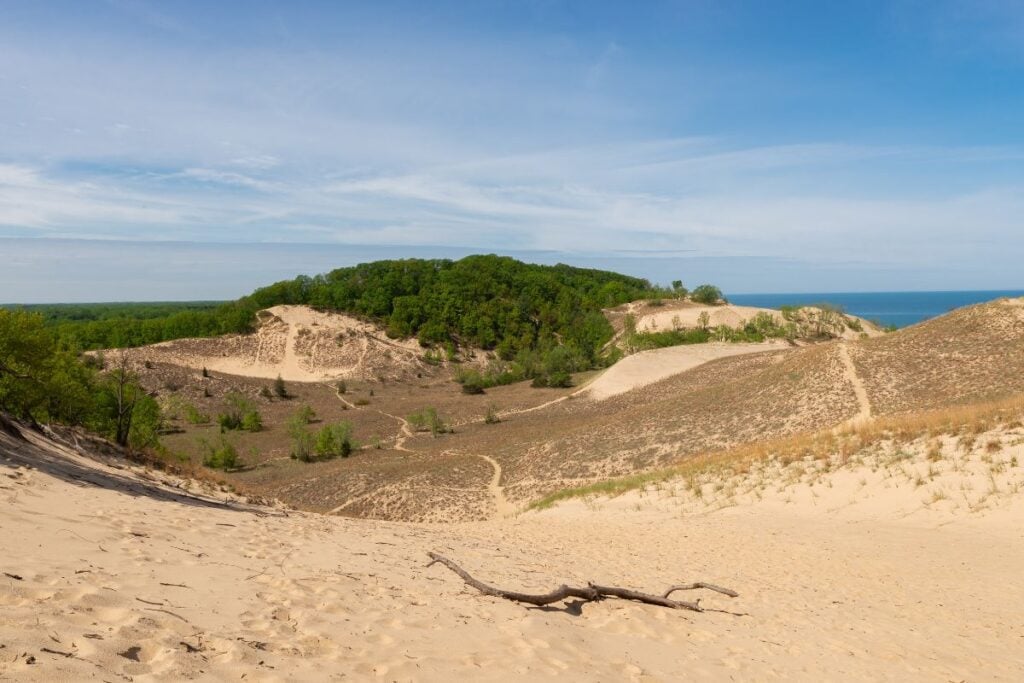
The Best Sand Dunes on Lake Michigan
This is the heart of Michigan’s dune country. From the Indiana border up to the Leelanau Peninsula, the eastern shore of Lake Michigan is one nearly continuous ribbon of dunes. Here are the ones worth planning a trip around, roughly south to north.
Warren Dunes State Park (Sawyer)
Best for: Chicago-area visitors, first-time dune climbers, families.
The southernmost of the big dune parks, Warren Dunes is the unofficial western gateway to Michigan’s state park system and the closest major dune to Chicago — about 90 minutes. Its dune formation rises to roughly 260 feet, with Tower Hill the high point at about 240 feet, and on a clear day you can see the Chicago skyline from the top. There are 3 miles of Lake Michigan beach, 6 miles of trails, a dedicated dog beach, strong accessibility (beach wheelchairs and Mobi-Mats), and two campgrounds. It’s the perfect introduction to Michigan dunes if you’ve never climbed one.
- 📍 12032 Red Arrow Highway, Sawyer, MI 49125
- 🎫 Michigan Recreation Passport required
- 👉 Full details: Warren Dunes State Park Guide
Grand Mere State Park (Stevensville)
Best for: Quiet dune scenery, birding, escaping the crowds.
Just north of Warren Dunes, Grand Mere is the one I point people to when they want the dune scenery without the summer crowds. This 1,127-acre park has about a mile of Lake Michigan frontage, tall dunes, and three inland lakes tucked behind them. It’s quieter, wilder, and a favorite for birders during migration. There’s a bit of a walk through the dunes to reach the water, which keeps it peaceful.
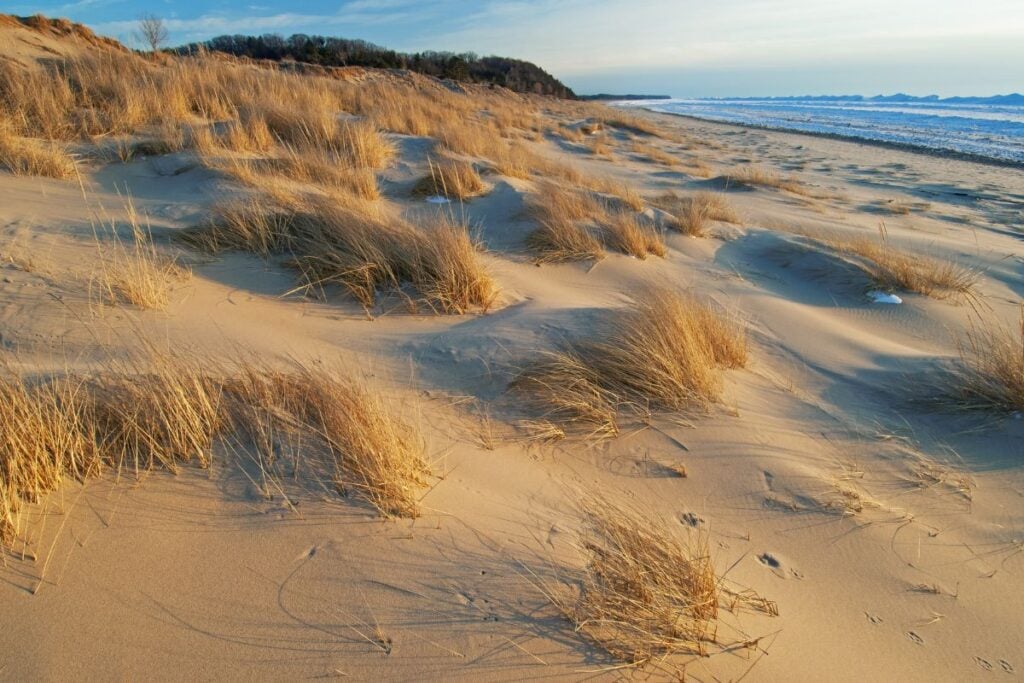
Saugatuck Dunes State Park & Saugatuck Dune Rides
Best for: Combining dunes with a charming art town; a guided dune ride.
Saugatuck gives you two very different dune experiences. Saugatuck Dunes State Park is a quiet, day-use park with about 13 miles of hiking trails, coastal dunes over 200 feet tall, and a roughly 10-minute walk through wooded dunes to reach 2.5 miles of secluded Lake Michigan beach. Then there’s Saugatuck Dune Rides — one of only two places in Michigan where the public can ride the dunes in a vehicle, aboard a vintage open-air dune schooner for a fun, roughly 40-minute guided tour on private dunes. Afterward, the town of Saugatuck itself is a haven for art galleries, antiques, and good food.
P.J. Hoffmaster State Park (Muskegon)
Best for: Learning the science, family-friendly dune climbing.
Hoffmaster is the dune park I recommend for anyone traveling with curious kids. It has 3 miles of Lake Michigan shoreline, forested dune trails, and — the differentiator — the Gillette Sand Dune Visitor Center, which does a genuinely good job explaining how the whole system formed. The Dune Climb Stairway leads to an overlook with sweeping views. It’s between Muskegon and Grand Haven, so it’s easy to reach from West Michigan’s bigger towns.
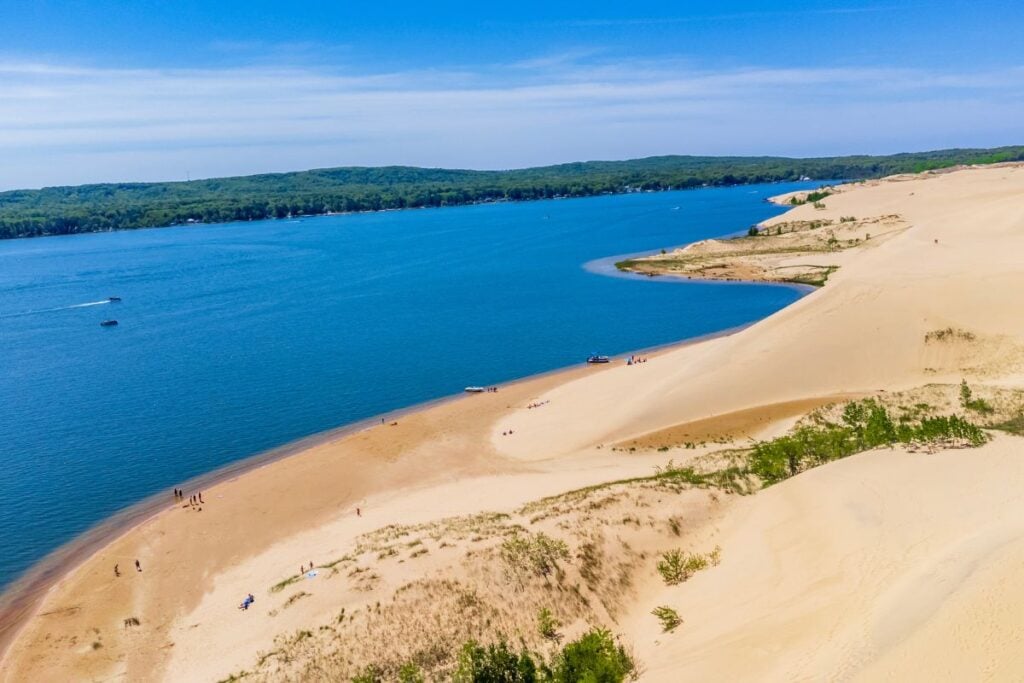
Silver Lake Sand Dunes (Mears)
Best for: Driving your own ORV; the classic Mac Wood’s dune ride.
Silver Lake is unlike any other dune in the state — it’s the only place east of the Mississippi where you can legally drive your own vehicle on open sand dunes. The ~2,000 acres of dunes are split into three zones: a 450-acre ORV area for 4x4s, ATVs, and dirt bikes; a free pedestrian area you can hike; and the area leased by Mac Wood’s Dune Rides, which has run guided buggy tours since 1930. Add Little Sable Point Lighthouse, two lakes for swimming, and a big campground, and it’s a full family-vacation destination, not just a dune.
- 📍 Mears, MI 49436 (Silver Lake State Park)
- 🎫 Recreation Passport for the park; ORV license + trail permit to ride the dunes
- 👉 Full details: Silver Lake Sand Dunes Guide
Ludington State Park & Nordhouse Dunes
Best for: Big scenery, backcountry solitude, serious hikers.
North of Silver Lake, Ludington State Park is one of the crown jewels of the Michigan state park system — dunes sandwiched between Lake Michigan and Hamlin Lake, the Big Sable Point Lighthouse, and miles of trails. Just south of it lies Nordhouse Dunes, within the Huron-Manistee National Forest, and this one is special: it’s the only federally designated Wilderness area in the Lower Peninsula. That means no roads, no motors, no signage, and 4,000-year-old dunes you have to work to reach. Bring a map and a compass — the trails lost their markings when it became wilderness in 1987 — and go for the solitude.
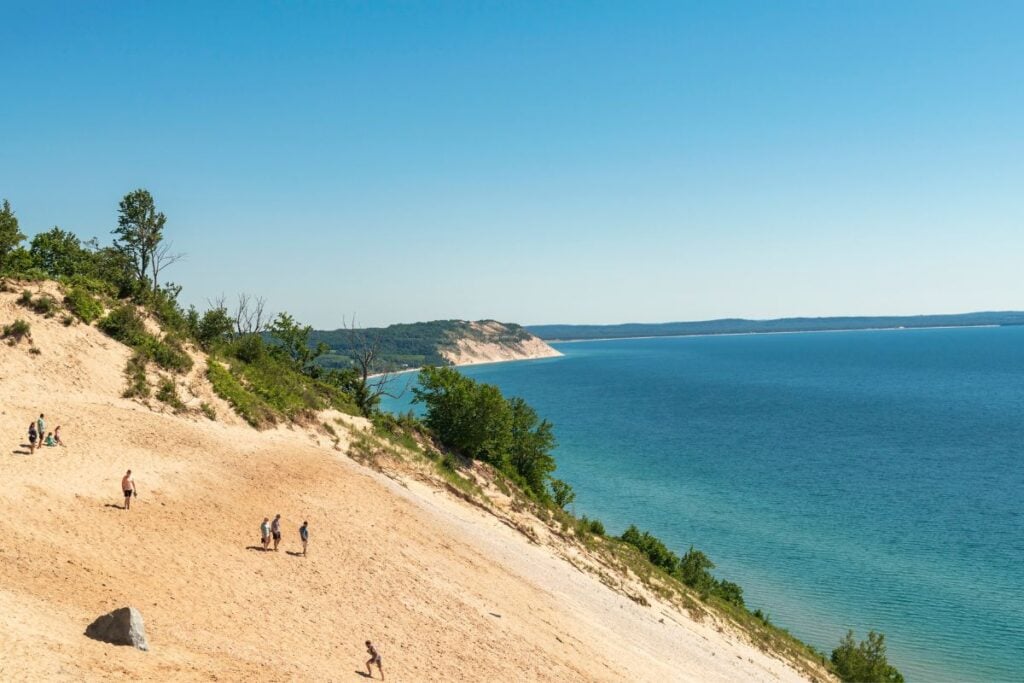
Sleeping Bear Dunes National Lakeshore (Empire/Glen Arbor)
Best for: The definitive Michigan dune experience; the famous Dune Climb.
If you only see one Michigan dune in your life, make it Sleeping Bear. Voted “The Most Beautiful Place in America” by Good Morning America viewers, it’s the largest freshwater dune system in the world, with perched dunes rising roughly 450 feet above Lake Michigan across 35 miles of shoreline. The Dune Climb is the iconic stop — a wall of sand you scramble up, with the option to keep going all the way to the lake (a serious workout back up). Don’t miss the Pierce Stocking Scenic Drive, the Empire Bluff Trail, and the beach towns of Glen Arbor and Empire nearby.
- 📍 Near Empire and Glen Arbor, in Leelanau and Benzie counties
- 🎫 National Park pass (America the Beautiful or Sleeping Bear-specific), not the state Recreation Passport
- 👉 Full details: Sleeping Bear Dunes Guide
Arcadia Dunes (Arcadia)
Best for: Hiking and mountain biking with a Lake Michigan overlook.
Just south of Sleeping Bear along scenic M-22, the Arcadia Dunes preserve offers more than 15 miles of trails through varied habitat. The Old Baldy Trail climbs to a dune overlook with a big Lake Michigan view (a universally accessible trail to the dune was added in 2017), and nearby Inspiration Point is one of the best pull-offs on the whole M-22 scenic drive. This is a hiking-and-biking dune rather than a beach-day dune.
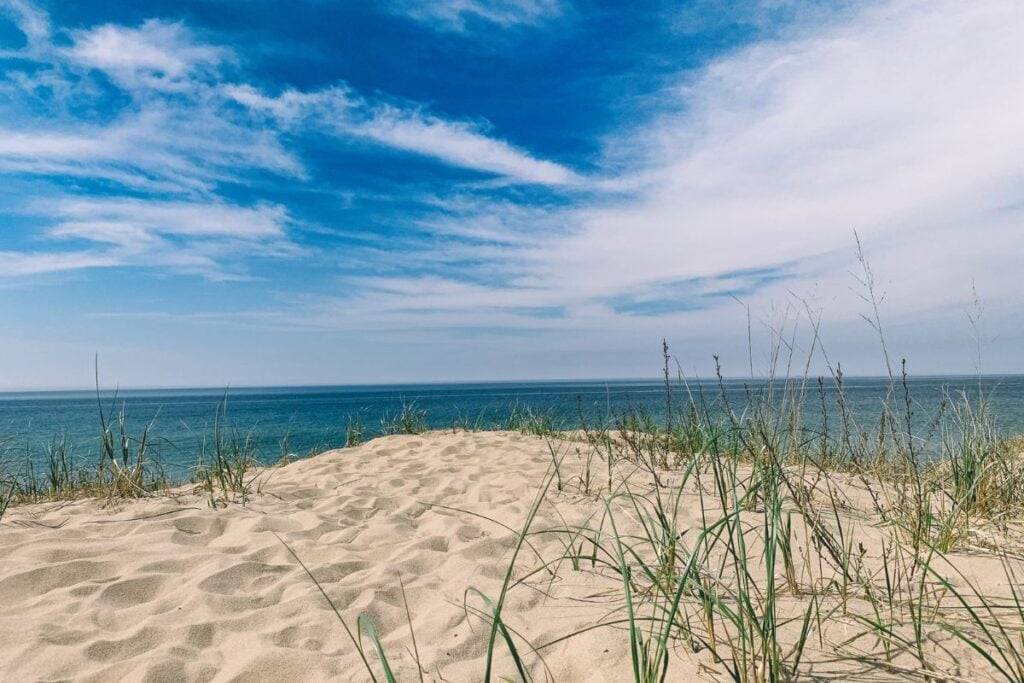
Sand Dunes on Lake Huron: The Thumb
Here’s the part most dune guides skip entirely. Michigan’s dunes aren’t only on Lake Michigan — there are lovely rolling dunes on the Lake Huron side too, at the very tip of the Thumb.
Port Crescent State Park (Port Austin)
Best for: A quieter dune experience, stargazing, and Thumb-coast camping.
Port Crescent sits just outside Port Austin at the tip of Michigan’s Thumb, with 3 miles of sandy Lake Huron shoreline and rolling dunes running through a pine-and-oak forest. A 900-foot boardwalk with five picnic decks gives you scenic views right from the top of the dunes in the day-use area, and there’s a short, flat Dunes Nature Trail plus a more rugged 2.5-mile trail with three overlooks of Saginaw Bay. What makes Port Crescent really special: it’s a designated dark sky preserve, so after a day on the dunes you can stay for some of the best stargazing in the state (there’s a viewing platform near Parking Lot D). The park is also the jumping-off point for a kayak trip to the famous Turnip Rock, and its campground has beloved waterfront sites right on the beach.
- 📍 On M-25 near Port Austin, at the tip of the Thumb (Huron County)
- 🎫 Michigan Recreation Passport required
- 💡 Note the day-use area and the campground have separate entrances about two miles apart
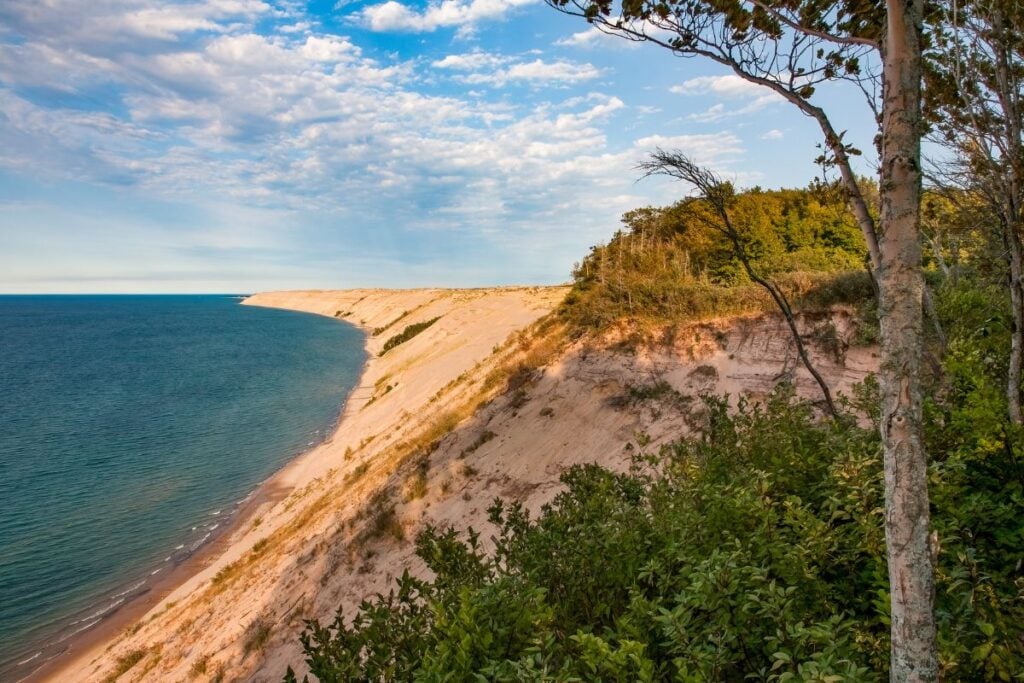
Sand Dunes in the Upper Peninsula: Lake Superior
Yes — there are big sand dunes in the U.P. too, and they might be the most surprising of all, rising right out of Lake Superior.
Grand Sable Dunes & the Log Slide (Grand Marais)
Best for: Dramatic Lake Superior views; pairing dunes with a U.P. road trip.
Within Pictured Rocks National Lakeshore, on the Grand Marais (eastern) end, the Grand Sable Dunes perch on top of the Grand Sable Banks and tumble down toward Lake Superior. The best-known viewpoint is the Log Slide Overlook, about 7 miles west of Grand Marais off County Road H-58 — a short, flat walk from the parking lot (there’s an accessible boardwalk option) leads to a platform standing roughly 175 feet above the lake, with the Au Sable Light Station visible to the west and the dunes sweeping east.
You can run down the slide to the water, but heed the warning signs: it takes a few minutes to get down and can take an hour or more to climb back up through deep sand — the park literally cautions against attempting it if you’re not in good shape. There’s no fee to visit the overlook. Pair it with nearby Sable Falls and the Au Sable Lighthouse hike for a perfect eastern-Pictured-Rocks day.
How to Explore the Dunes: Your Options
One of the best things about Michigan’s dunes is that there’s a way in for every kind of traveler, whether you want your heart pounding or your feet up.
- Climb them on foot. The classic. Warren Dunes, Sleeping Bear’s Dune Climb, Silver Lake’s pedestrian area, and the Log Slide all let you scramble up under your own power. Free (with park entry) and unforgettable.
- Drive your own ORV. Only at Silver Lake — the one place east of the Mississippi you can take a 4×4, ATV, or dirt bike onto open dunes. Permits and a safety flag required.
- Take a guided dune ride. No vehicle or gear needed. Mac Wood’s Dune Rides at Silver Lake and Saugatuck Dune Rides are the two public options, both around 40 minutes with a guide.
- Sandboard or sled. Popular at Silver Lake and Warren Dunes; you can rent boards from outfitters near the dunes.
- Hike the trails. For dune scenery without the vertical sand climb, try Saugatuck Dunes, Hoffmaster, Nordhouse, Arcadia’s Old Baldy, or Port Crescent’s boardwalk.
- Just hit the beach. Every one of these has sand and water. Sometimes the best way to enjoy a dune is to lie at the bottom of it.
Dune Safety & Tips to Remember
Dunes look like a giant playground, and they are — but they’re also a desert-like environment and a fragile one. A few things I always tell people before they head out:
- Respect the climb-back-up rule. Running down a dune is easy and thrilling; climbing back up through soft sand is genuinely exhausting. It can take five or six times longer than the descent. Know your limits before you commit to going all the way down.
- Bring more water than you think you need. There’s no shade on open sand, and it radiates heat. Water, sunscreen, sunglasses, and a hat are non-negotiable in summer.
- Wear the right shoes — or none. Midday sand can get hot enough to burn bare feet. Bring sandals or shoes you don’t mind filling with sand, and know that going barefoot is sometimes easier on a steep climb than shoes full of sand.
- Stay on marked trails. This isn’t just etiquette. Dune vegetation like Pitcher’s thistle is federally threatened, and the plants are what hold the dune together. Trampling them damages the ecosystem and the dune itself.
- Watch the water, especially on the big lakes. Lake Michigan and Lake Superior currents and waves can be dangerous. Check the beach flag conditions, heed red flags, and watch kids closely.
- Tell someone your plan. If you’re hiking a remote dune like Nordhouse or heading down the Log Slide alone, let someone know where you’ll be.
- Time your visit for light. Dunes are at their most beautiful in the low, golden light of early morning and evening — and cooler to climb then, too. Sunset from the top of a dune over the water is the whole reason to be there.
Best Time to Visit Michigan’s Sand Dunes
Summer (June–September) is peak season — warm water, open concessions, dune rides running, and the longest days. It’s also the busiest, so arrive early at popular parks like Warren Dunes and Sleeping Bear on weekends.
Fall (late September–October) might be my favorite. The crowds thin out, the air is cooler for climbing, and the fall color behind the dunes is spectacular — especially at Sleeping Bear and along M-22. Spring brings wildflowers and solitude, though the water’s cold. And the dunes don’t close in winter — snow-covered dunes are a completely different, quiet kind of beautiful, and several parks offer cross-country skiing and snowshoeing (Silver Lake even has a winter fat-tire biking season). Just dress for Great Lakes wind.
Michigan Sand Dunes FAQ
Where are the biggest sand dunes in Michigan?
The biggest and tallest are at Sleeping Bear Dunes National Lakeshore near Empire and Glen Arbor, where perched dunes rise roughly 450 feet above Lake Michigan — it’s the largest freshwater dune system in the world. Other large dune areas include Silver Lake, Warren Dunes, Ludington State Park, and Saugatuck Dunes, all along Lake Michigan’s eastern shore.
Where can you drive on the sand dunes in Michigan?
Silver Lake Sand Dunes in Mears is the only place in Michigan — and the only place east of the Mississippi River — where you can drive your own ORV on open sand dunes. You need a Recreation Passport, an ORV license and trail permit, and a safety flag. If you don’t have a dune-ready vehicle, you can rent one nearby or take a guided Mac Wood’s Dune Ride.
Can you experience the dunes without climbing them?
Absolutely. Guided dune rides at Silver Lake (Mac Wood’s) and Saugatuck let you experience the dunes from a vehicle. Boardwalks and overlooks — like Port Crescent’s 900-foot boardwalk and the accessible Log Slide platform in the U.P. — give you dune views with little or no climbing. And several parks have accessible beach walkways and beach wheelchairs.
Are there sand dunes in the Upper Peninsula?
Yes. The Grand Sable Dunes within Pictured Rocks National Lakeshore, near Grand Marais, rise above Lake Superior and are best seen from the Log Slide Overlook, about 175 feet above the water. It’s one of the most surprising and dramatic dune viewpoints in the state.
Do you need a permit to visit Michigan’s sand dunes?
Most dune parks are Michigan state parks, which require a Recreation Passport for vehicle entry ($15/year for resident vehicles). Sleeping Bear Dunes is a national lakeshore and requires a National Park pass instead. To ride the Silver Lake ORV area, you also need an ORV license and trail permit. The Log Slide Overlook in the U.P. has no entrance fee.
What should I bring to the sand dunes?
Bring plenty of water, sunscreen, sunglasses, and a hat — there’s no shade on open sand. Wear sturdy shoes or sandals (midday sand can burn bare feet), and pack high-protein snacks if you’re climbing. On remote dunes like Nordhouse, bring a map and compass, since trails aren’t marked. And always check Great Lakes beach conditions before swimming.
Are Michigan’s sand dunes dog-friendly?
It varies by park. Warren Dunes has a dedicated dog beach, and many state park dune areas allow leashed dogs on trails and parts of the beach. However, dogs are not allowed on the Sleeping Bear Dune Climb or in some sensitive areas. Always check the specific park’s rules and keep dogs leashed to protect the fragile dune vegetation and wildlife.
Plan Your Michigan Dune Trip
Whether you want to gun a 4×4 over the sand at Silver Lake, scramble up the Sleeping Bear Dune Climb, watch the stars from the dunes at Port Crescent, or stand 175 feet above Lake Superior at the Log Slide, Michigan’s dunes deliver a kind of landscape you can’t find anywhere else in the world. Pick one region, or string several together into a road trip — you really can’t go wrong. For deeper guides to the biggest destinations, start here:
- Sleeping Bear Dunes National Lakeshore Guide
- Silver Lake Sand Dunes Guide
- Warren Dunes State Park Guide
- Best Lake Michigan Lighthouses
- Michigan Bucket List
- About Jill
- Recent Michigan Travel Tips

Jill Halpin is a Michigan travel expert and founder of MyMichiganBeach.com. She has been sourced by The Washington Post and featured in The Detroit News and Detroit Free Press, and appears regularly on WDIV Detroit, FOX 2 Detroit, FOX 17 West Michigan, FOX 32 Chicago, WGN Chicago, and NewsNation — 60+ television appearances to date. She holds an MLIS from Wayne State University and is a Library of Congress Information Science Fellow. See all media features.