
21 Best Things to Do in the Upper Peninsula (2026)
Last Updated: June 2026
The best things to do in Michigan’s Upper Peninsula range from the second-largest waterfall east of the Mississippi to a freshwater spring so clear it looks bottomless, and you could spend a week up here and still not see it all. The U.P. covers more than 16,000 square miles of forest, shoreline, and small towns, and after years of covering it I’ve narrowed the must-dos down to 21 that are genuinely worth the drive.
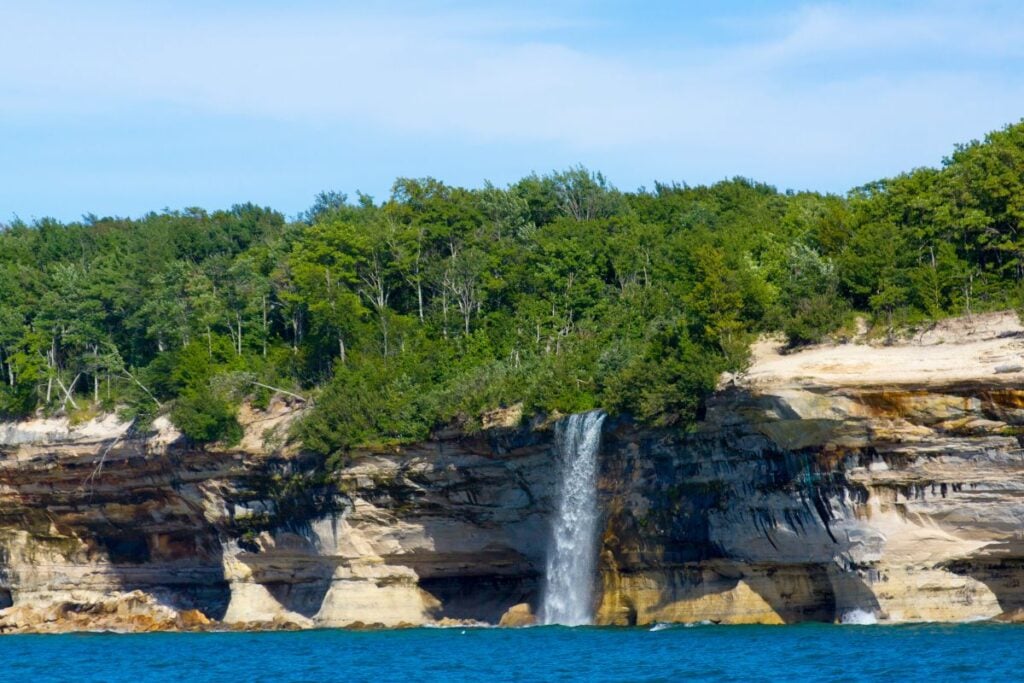
We come up here to get away from the city and disappear into the kind of natural beauty Michigan does better than almost anywhere. This guide is organized so you can use it like your own personal visitors center — pick a region, build a route, and start your Upper Peninsula bucket list. Here’s what actually matters and what’s worth the detour.
🗓️ At a Glance: Upper Peninsula Highlights
- 🏆 Best overall: Pictured Rocks National Lakeshore by kayak or boat tour
- 💧 Best waterfall: Tahquamenon Falls, the second-largest east of the Mississippi
- 👨👩👧 Best for families: Soo Locks boat tour and GarLyn Zoo in Naubinway
- 💰 Best free stop: Watching freighters from the Soo Locks viewing platform
- 📸 Most photogenic: Kitch-iti-kipi, the “Mirror of Heaven” spring near Manistique
- 🍂 Best in fall: Brockway Mountain Drive in Copper Harbor, peaking late September
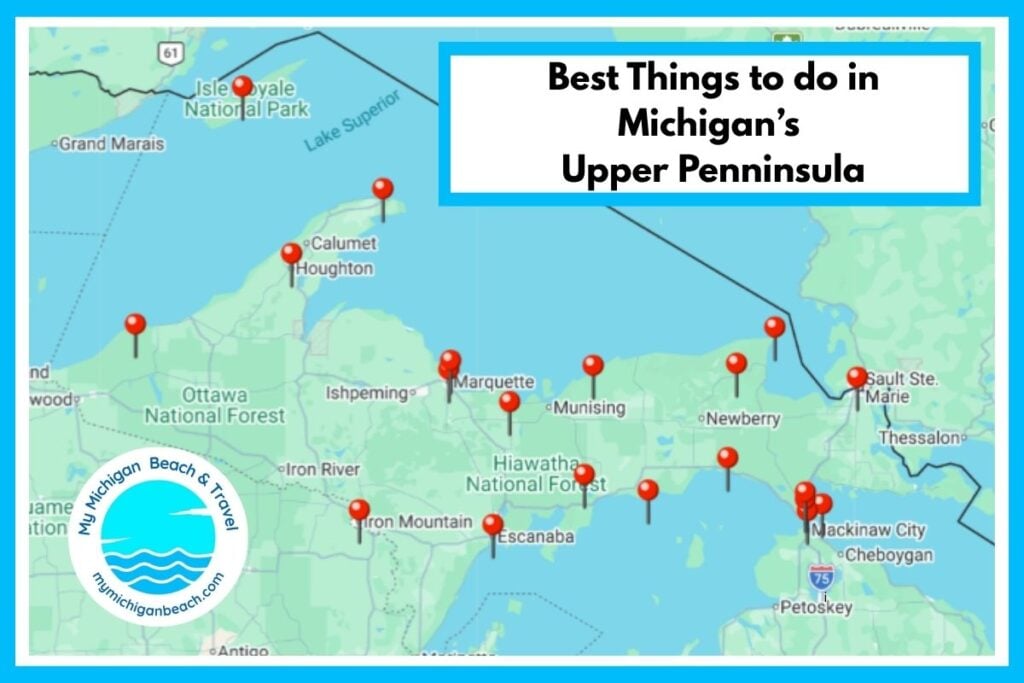
About Michigan’s Upper Peninsula
The Upper Peninsula has an identity all its own — locals even half-jokingly call themselves Yoopers and the Lower Peninsula “trolls” (because we live under the bridge). It’s the only land mass in the world touched by three Great Lakes: Superior, Michigan, and Huron. That means more than 1,700 miles of shoreline, 300-plus waterfalls, and a pace that slows you down the moment you cross the Mackinac Bridge.
Covering Michigan travel for outlets including WDIV Detroit and FOX 17 West Michigan, the question I get most is “how much time do I need up here?” Honestly, more than you think — but this list will help you spend it well.

Top Things to Do in the Upper Peninsula
1. Hike to Tahquamenon Falls
Tahquamenon Falls State Park, between Newberry and Paradise, is home to the Upper Falls — the second-largest waterfall east of the Mississippi after Niagara. The Upper Falls is about 200 feet wide with a roughly 50-foot drop, and at peak flow as much as 50,000 gallons of amber, tannin-stained water pour over the edge every second. Locals call it “Root Beer Falls,” and the color is entirely natural, from cedar swamps upstream.
You can easily fill a day on the trails between the Upper and Lower Falls. Tahquamenon Falls is a four-season park — hiking before the snow, then snowmobiling, snowshoeing, and cross-country skiing all winter. A Recreation Passport is required for entry, and leashed dogs are welcome on the trails.
💡 PRO TIP: Pair the falls with a “mini” road trip to Crisp Point Lighthouse, about an hour north — a remote, century-old Lake Superior light worth the rough access road. Animal lovers should also stop at Oswald’s Bear Ranch near Newberry, a rescue that gives neglected and orphaned bears a permanent home.

2. Explore Marquette
Marquette is the largest city in the Upper Peninsula, yet it still feels like a small town — its population is on par with some mid-size Detroit suburbs. Downtown has a genuinely good craft beer scene; Ore Dock Brewing, Barrel + Beam, and Blackrocks Brewery are my go-tos, surrounded by independent shops and cafes.
People here live outdoors. Hike Sugarloaf Mountain for a big Lake Superior view, ski Marquette Mountain in winter, or walk out to the iconic ore dock that anchors the city’s mining history. The 47-mile Iron Ore Heritage Trail traces the Marquette Iron Range, and this stretch of shoreline is one of the better spots in the Lower 48 to catch the northern lights on a clear, dark night.

3. Marvel at the Soo Locks
In Sault Ste. Marie, the Soo Locks let massive freighters travel between Lake Superior and Lake Huron, bridging the 21-foot drop of the St. Marys River. They’re affectionately called the “linchpin of the Great Lakes,” and watching a 1,000-foot ship rise or fall on 22 million gallons of gravity-fed water is genuinely jaw-dropping in person. You can watch for free from the viewing platform, or take a narrated Soo Locks boat tour and lock through yourself.
The eastern U.P. around the Soo is one of the region’s best-kept secrets. Don’t overlook the quiet shorelines of the Les Cheneaux Islands or Drummond Island, a natural paradise just offshore.

4. Hike Presque Isle Park and the Black Rocks
Presque Isle Park is a 323-acre forested peninsula reaching into Lake Superior just north of Marquette, and one of the county’s most-visited spots. Hiking and biking trails connect cliffside overlooks on the east with Sunset Point on the west. For a thrill, head to the Black Rocks and leap from the 15-foot cliffs into the cold, clear water — a Marquette rite of passage.
5. Admire the Clear Waters of Kitch-iti-kipi
About 15 minutes north of Manistique, Kitch-iti-kipi is Michigan’s largest natural freshwater spring — 200 feet across, 40 feet deep, pushing more than 10,000 gallons a minute through the limestone at a constant 45°F. The Ojibwe nicknamed it the “Mirror of Heaven,” and it lives up to it: you glide across on a self-operated observation raft and look straight down through emerald water to ancient logs and drifting trout.
No swimming, fishing, or kayaking is allowed — the spring at Palms Book State Park is for viewing only — but the raft and the path to it are ADA-accessible. A Recreation Passport is required for entry, and it’s open year-round; the water rarely freezes even in deep winter.


6. Kayak Pictured Rocks National Lakeshore
Pictured Rocks National Lakeshore is the U.P.’s signature destination — miles of multicolored sandstone cliffs rising straight out of Lake Superior. The cliffs are spectacular from a clifftop overlook, but the view is genuinely best from the water. Book a boat tour out of Munising, take a guided kayak tour, or bring your own and paddle the painted walls yourself.
For more water time, head out to Grand Island, about a half-mile offshore from Munising in the Hiawatha National Forest. Pack a lunch and spend the day on its rocky overlooks, forest trails, and quiet sand beaches.
💡 PRO TIP: Heads up if you’ve read older guides — the beloved Gitche Gumee Agate and History Museum in Grand Marais permanently closed in 2022. Owner Karen Brzys (the “Agatelady”) now runs the Agatelady Rock Shop nearby, with Lake Superior agates and summer lectures. While you’re out this way, take the short 0.6-mile hike to Miners Falls and its 40-foot drop.
7. Bike Mackinac Island
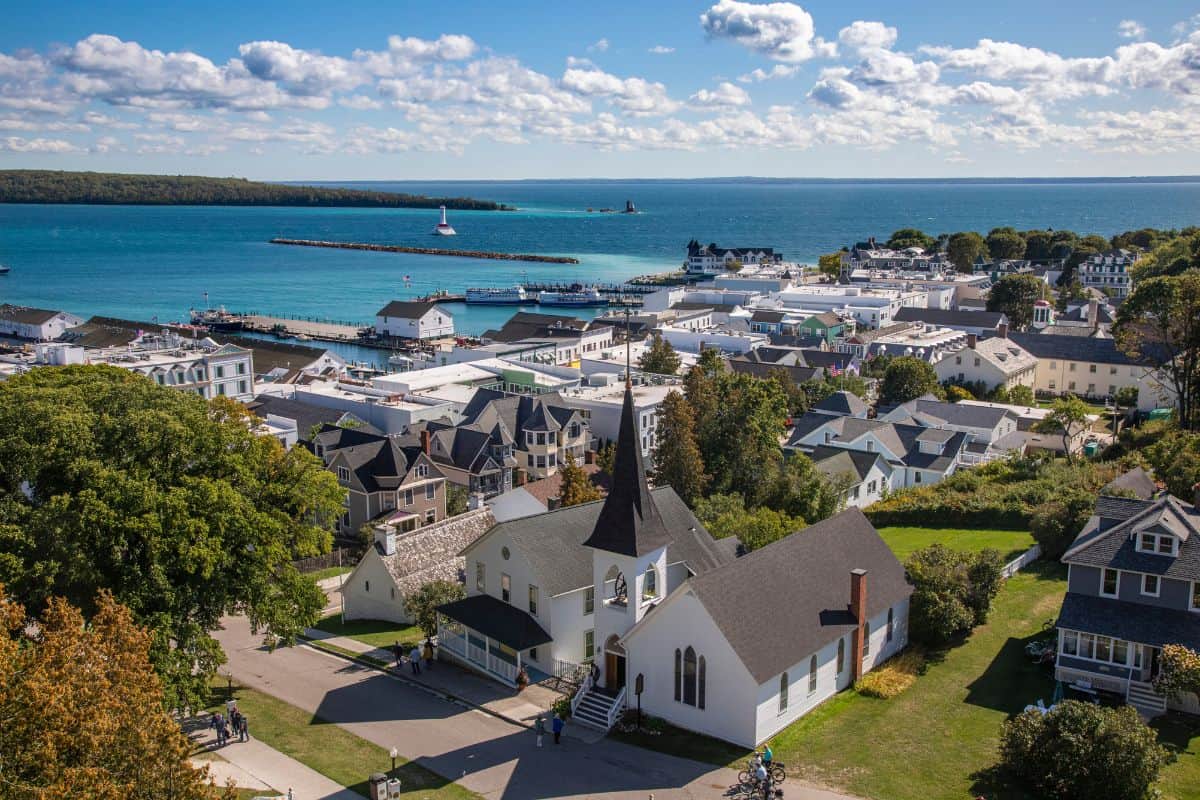
Mackinac Island sits in Lake Huron just off the eastern U.P., and stepping off the ferry feels like stepping into the Victorian era. The car-free downtown is packed with old buildings housing pubs, B&Bs, and the island’s famous fudge shops. No cars are allowed, so rent a bike or take a horse-drawn carriage to circle the island and reach landmarks like Arch Rock.

8. Walk Across the Mackinac Bridge
The Mackinac Bridge is the gateway to the U.P. and one of the longest suspension bridges in the world, connecting Michigan’s two peninsulas across the Straits of Mackinac. Most of the year you can only drive it, but every Labor Day the bridge closes to traffic for the Mighty Mac Bridge Walk, when thousands cross the five-mile span on foot. It belongs on every Michigander’s bucket list.
💡 PRO TIP: Love ice fishing? In winter, head to Trout Lake, popular for its variety — northern pike, perch, walleye, and trout.

9. Camp in the Porcupine Mountains
The Porcupine Mountains Wilderness State Park protects roughly 35,000 acres of old-growth forest, rivers, and waterfalls in the western U.P., with over 90 miles of hiking trails. The Escarpment Trail delivers the postcard view of the “Porkies” — the picturesque Lake of the Clouds set deep in the hills. It’s one of the top camping and backpacking destinations in the state, and the night skies out here are spectacular.
10. See the Tigers at GarLyn Zoo in Naubinway
The family-owned GarLyn Zoo in Naubinway brings native and exotic wildlife to the U.P. Visitors can see everything from goats, llamas, camels, and reindeer to wolves, lions, and tigers. It’s an easy, kid-friendly stop right off US-2 along the northern Lake Michigan shoreline.

11. Visit the Great Lakes Shipwreck Museum at Whitefish Point
At Whitefish Point on Lake Superior’s “Shipwreck Coast,” the Great Lakes Shipwreck Museum tells the story of the wrecks that litter this dangerous stretch of water. Its most powerful artifact is the recovered bell from the wreck of the Edmund Fitzgerald, displayed alongside exhibits explaining why so many ships went down here. The historic Whitefish Point Lighthouse stands right on the grounds.
Don’t miss the Whitefish Point Bird Observatory, near the Seney National Wildlife Refuge — a premier spot to watch migrating hawks, eagles, owls, and songbirds, especially in spring.
12. Feed the Deer at Deer Ranch in St. Ignace
The white-tailed deer is Michigan’s state game mammal, and at the Deer Ranch in St. Ignace you can get up close to feed and pet them. It’s a simple, old-school roadside attraction — and one that leaves kids with a real soft spot for these animals.

13. Take a Fall Color Tour in Copper Harbor
Fall color in northern Michigan peaks earliest the farther north you go, which makes Copper Harbor, at the tip of the Keweenaw Peninsula, the best place for an early dose. Reds, oranges, and golds blanket the whole peninsula, usually peaking around the end of September. Drive Brockway Mountain Drive, a nearly 10-mile route that’s one of the most scenic drives in Michigan, with sweeping views of Lake Superior.
While you’re up here, visit Fort Wilkins Historic State Park, built in the 1840s during the copper rush. It’s part history museum, part state park, with camping and the Copper Harbor Lighthouse nearby.
💡 PRO TIP: Sneak in a short side trip to Eagle Harbor to see the Eagle Harbor Lighthouse — one of the prettiest on the Keweenaw.

14. See the Monarch Butterflies in Escanaba
Escanaba, on the shores of Little Bay de Noc, is the seat of Delta County in the southern U.P. — quaint, walkable, and right on the Lake Michigan shoreline. In late summer and early fall it earns its nickname as Michigan’s “Butterfly Capital,” when thousands of monarchs gather in the cedars of the Stonington Peninsula before migrating south.
Make time for Fayette Historic State Park on the Garden Peninsula, a remarkably well-preserved 1800s iron-smelting ghost town on a gorgeous limestone harbor.
15. Escape to Isle Royale National Park
Isle Royale is Michigan’s most isolated and least-visited national park, a remote Lake Superior island reachable only by ferry or seaplane. There’s no better place in the state to truly disappear into the wilderness. Backpackers, hikers, kayakers, and divers all find rugged, crowd-free adventure here — just plan well ahead, because getting there takes commitment and the park closes in winter.

16. Explore the Eben Ice Caves
The Eben Ice Caves near Eben Junction are one of the U.P.’s most popular winter destinations. They form when snowmelt runs over a small cliff and freezes into shimmering curtains and caverns of ice you can walk behind. It’s a phenomenon you have to see to believe — just wear ice cleats, because the trail in gets slick.
17. Climb Castle Rock in St. Ignace
Castle Rock, known to the Ojibwe as “Pontiac’s Lookout,” rises more than 195 feet above the water near St. Ignace and is one of the area’s oldest lookout points. Climb the stairs to the top for an unobstructed view of the Straits of Mackinac — Mackinac Island, Lake Huron, the Mackinac Bridge, and downtown St. Ignace all at once. It’s a classic, kitschy Michigan roadside stop, complete with a giant Paul Bunyan.
18. Tour the Iron Mountain Iron Mine
In Iron Mountain, you can tour a real iron mine that operated from 1870 to 1945, riding a train 2,600 feet into the mountain. Mining built the U.P., and skilled guides walk you through the tools, techniques, and stories of the era with demonstrations underground. It’s a cool, slightly chilly (literally — bring a jacket) window into the region’s industrial heyday.

19. Tour the Great Lakes Lighthouses
Michigan has more lighthouses than any other state, and a big share of them stand in the Upper Peninsula. Cruise the Lake Superior coast for the skeletal Whitefish Point Lighthouse or the more accessible Marquette Harbor Lighthouse. Along the southern U.P., Seul Choix Point on Lake Michigan and the offshore DeTour Reef Lighthouse on Lake Huron are both worth chasing. A handful of Michigan lighthouses even let you spend the night.
20. Have Fun at the Upper Peninsula State Fair
The U.P. has such a strong identity it hosts its own state fair, held every August in Escanaba. Expect carnival rides, festival food, and classic state-fair competitions, all with that distinct Yooper heart and soul.
21. Take a Mine Tour at Quincy Mine
Just over the bridge from Houghton in Hancock, the Quincy Mine offers a close-up look at Keweenaw copper-mining history. Tour the surface museum, then ride a tram down a steep hillside and take a tractor-pulled wagon seven levels underground into the mine itself. It’s the single best primer on what the Keweenaw copper rush was all about, and an easy stop on your way deeper into the peninsula.

When Is the Best Time to Visit the Upper Peninsula?
Summer (late June through August) is peak season, with warm-ish Great Lakes swimming, every attraction open, and long daylight — but it’s also when towns and campgrounds are busiest. Fall is my personal favorite: color peaks late September in the Keweenaw and into mid-October farther south, and the crowds thin out. Winter is for the Eben Ice Caves, frozen Tahquamenon, and 200-plus miles of groomed snowmobile trails. Spring brings roaring waterfalls and the year’s best birding at Whitefish Point.
Frequently Asked Questions
What is the Upper Peninsula known for?
Michigan’s Upper Peninsula is known for its dramatic natural beauty — Pictured Rocks National Lakeshore, Tahquamenon Falls, Kitch-iti-kipi spring, and Brockway Mountain Drive among the highlights. It has more than 300 waterfalls, 1,700 miles of Great Lakes shoreline, and endless forest trails, plus a rich mining and maritime history.
How many days do you need in the Upper Peninsula?
Plan at least 3 to 5 days to see the highlights without rushing, and a full week if you want to reach both the eastern U.P. (Tahquamenon, Whitefish Point, the Soo Locks) and the western U.P. (Porcupine Mountains, Copper Harbor). The peninsula is large and drive times between regions are long.
What is the biggest waterfall in the Upper Peninsula?
Tahquamenon Falls is the biggest — its Upper Falls is about 200 feet wide with a roughly 50-foot drop, making it Michigan’s largest waterfall and the second-largest east of the Mississippi River after Niagara. It’s in Tahquamenon Falls State Park between Newberry and Paradise and is open year-round.
What is the best thing to do in the Upper Peninsula?
Pictured Rocks National Lakeshore is the top pick — the multicolored Lake Superior cliffs are best seen by boat tour or kayak out of Munising. Close runners-up are Tahquamenon Falls, the Soo Locks boat tour, and Kitch-iti-kipi spring, depending on whether you want waterfalls, freighters, or clear water.
When is the best time to see fall colors in the Upper Peninsula?
Fall color peaks earliest in the far north — around the end of September in Copper Harbor and the Keweenaw Peninsula — and progresses into mid-October farther south. Brockway Mountain Drive near Copper Harbor is one of the best vantage points for an early, intense display over Lake Superior.
Can you visit the Upper Peninsula in winter?
Yes. Winter is a great time to visit for the Eben Ice Caves, a frozen Tahquamenon Falls, cross-country skiing, and more than 200 miles of groomed snowmobile trails. Many attractions like Kitch-iti-kipi stay open year-round, though some seasonal businesses and Isle Royale National Park close for the season.
More Things to Do in the Upper Peninsula


- About Jill
- Recent Michigan Travel Tips

Jill Halpin is a Michigan travel expert and founder of MyMichiganBeach.com. She has been sourced by The Washington Post and featured in The Detroit News and Detroit Free Press, and appears regularly on WDIV Detroit, FOX 2 Detroit, FOX 17 West Michigan, FOX 32 Chicago, WGN Chicago, and NewsNation — 60+ television appearances to date. She holds an MLIS from Wayne State University and is a Library of Congress Information Science Fellow. See all media features.